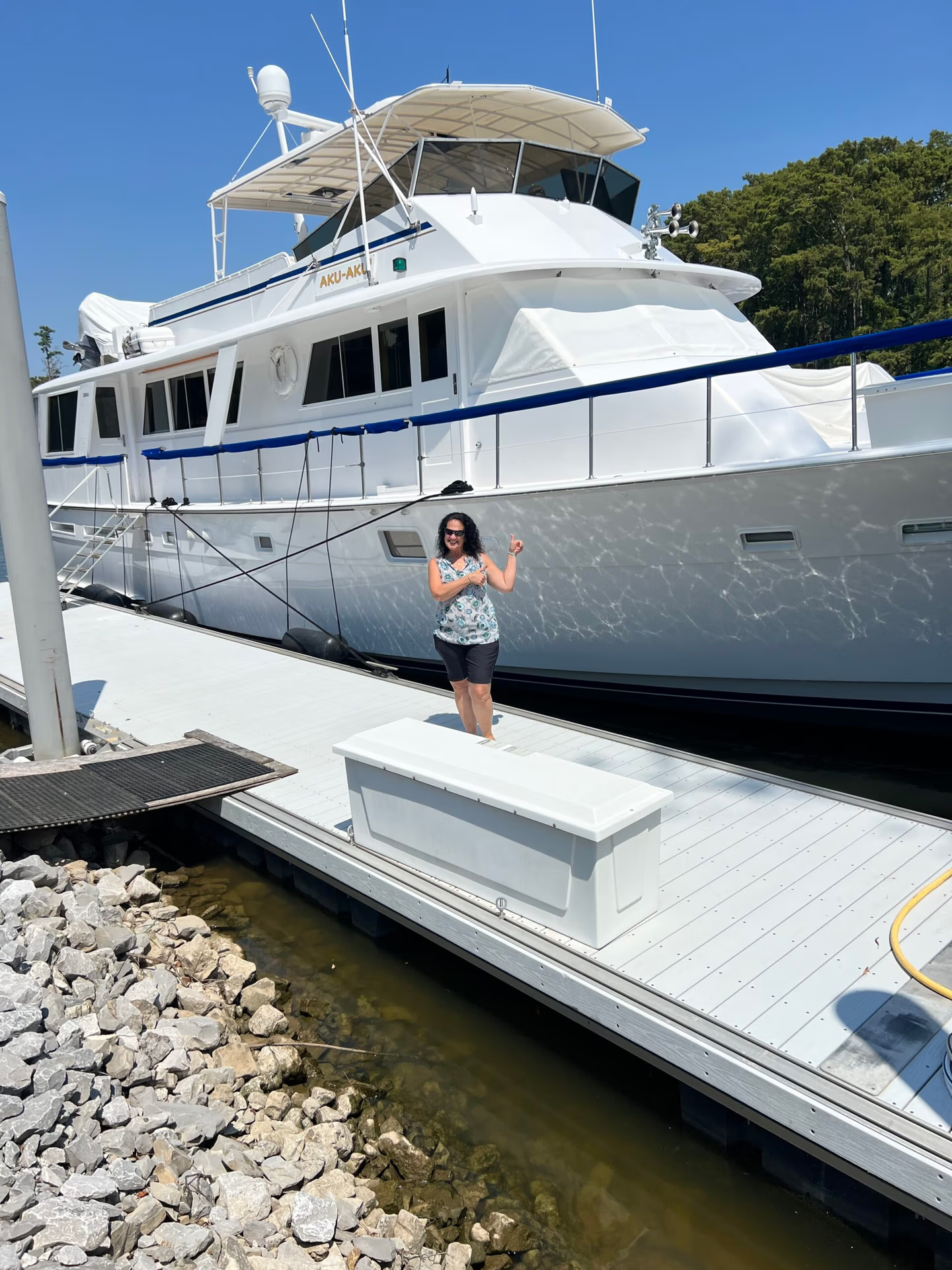
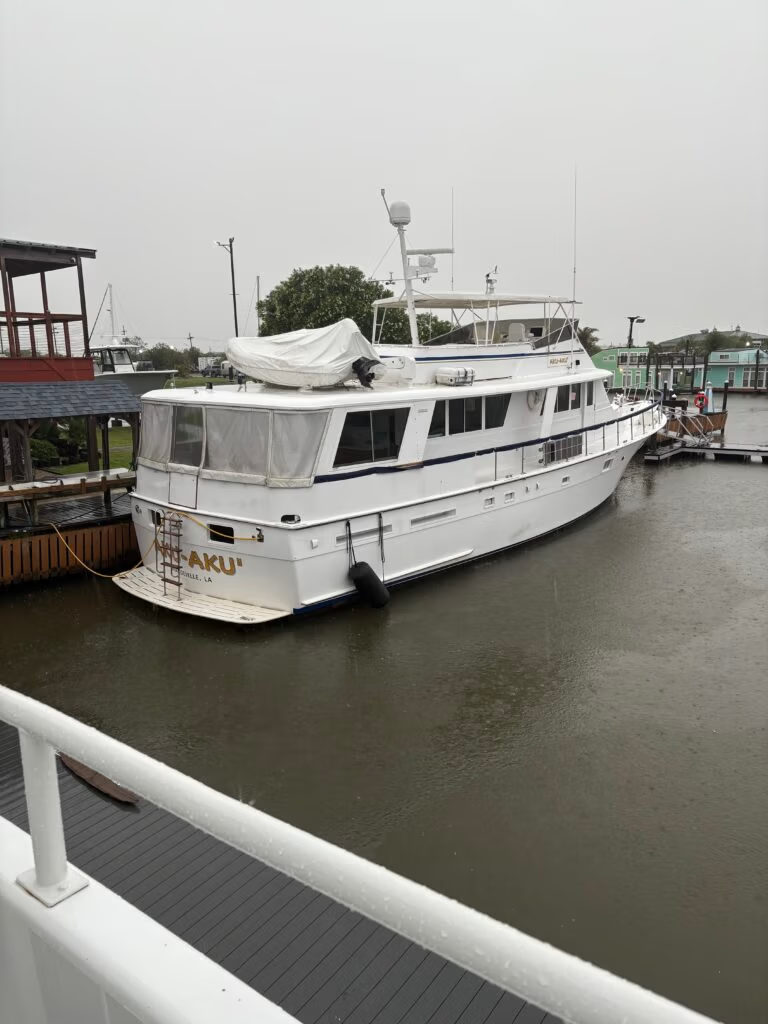
Join the Crew of AKU-AKU II

Explore the World

Photo by Peter Cox


How Did We Get Here?

Travel has always been one of our great joys—exploring new places, trying unfamiliar foods, and meeting people along the way. Our Alaskan cruise with Gary and Amy Hobbs completely mesmerized us; we spent hours scanning the shores as we glided past pristine wilderness, utterly hooked on the beauty of the Inside Passage. Yet, as magical as it was, we felt a limit: we couldn’t just follow our nose, peel off into an inviting bay, or even step ashore whenever we wanted. That itch to go farther really took hold after we discovered the YouTube series “Venture on the Inside Passage,” following a boat the same size as the Aku-Aku II. Watching that crew slip into secluded coves, explore quiet anchorages, and shape each day by curiosity instead of a schedule showed us a different way to experience Alaska—a way that feels much closer to how we truly love to travel.

Views

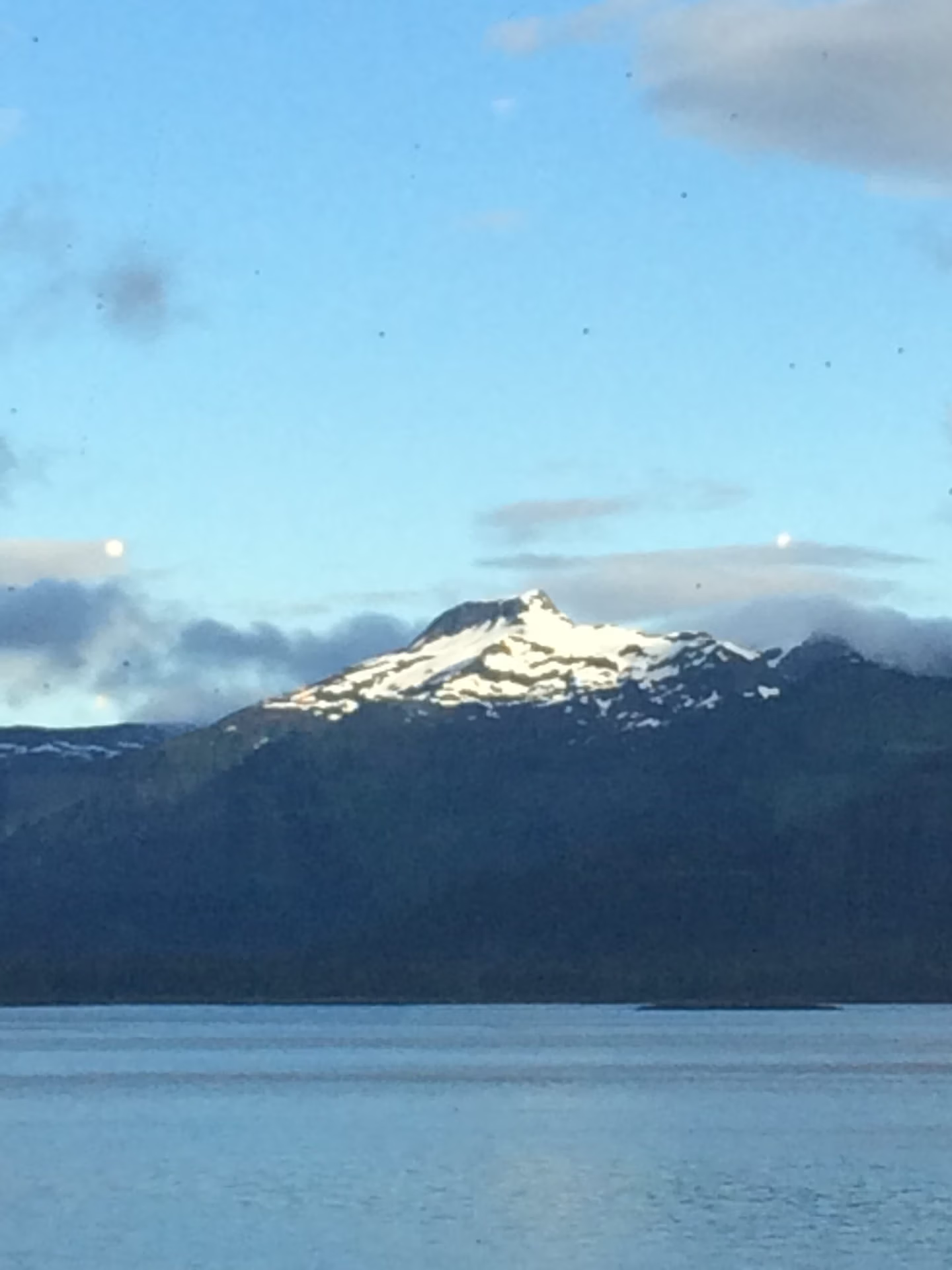
On the cruise we were on the "inside passage," land on both sides, we would sit on our balconies and watch for wildlife. The Ocean was very calm because we were protected from the Pacific by Islands.

Jennifer and Gary

We ate and ate and ate... such good food and we had a ball. Such a mixture of foods, highly recommend this cruise. If you decide to take this cruise, suggest you get a room with a balcony. We spent much of the day sitting there glassing the shore. Also excellent for seeing Killer Whales and other wild life.

Breakfast

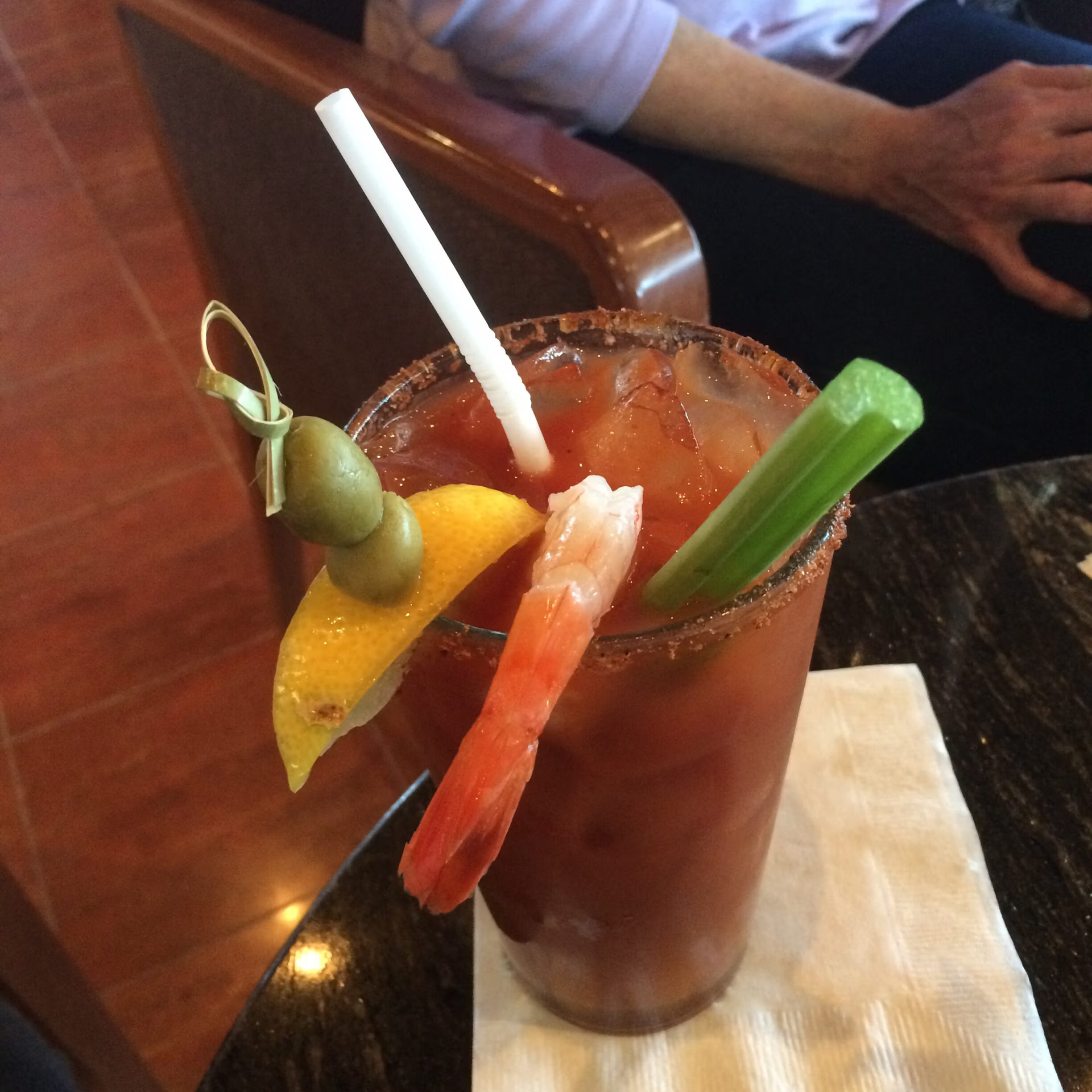
We would all go up to the bow of the ship first thing in the morning to claim a space to watch the day... we had to have breakfast and Bloody Mary's seemed to cover all the food groups....Over all the food was very good. They also let us bring wine on board, special procedure but very easy.

About us

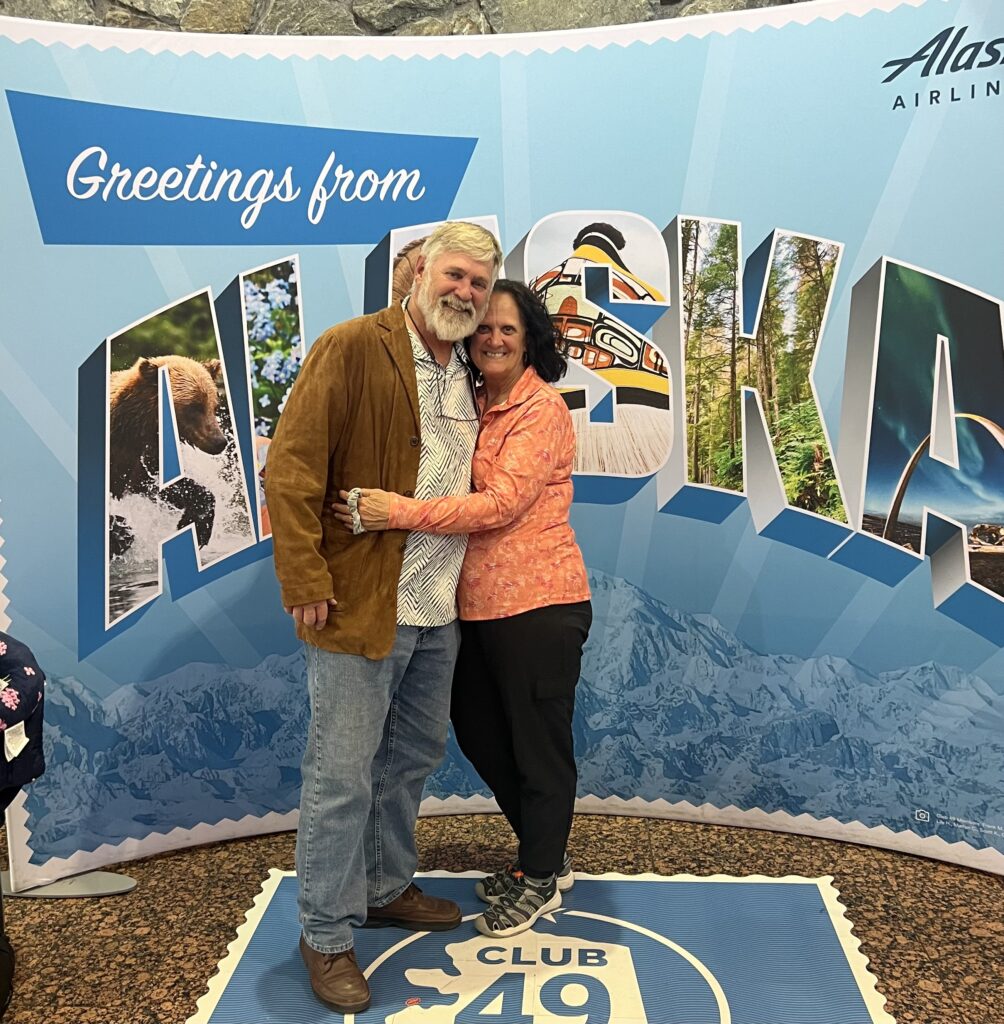
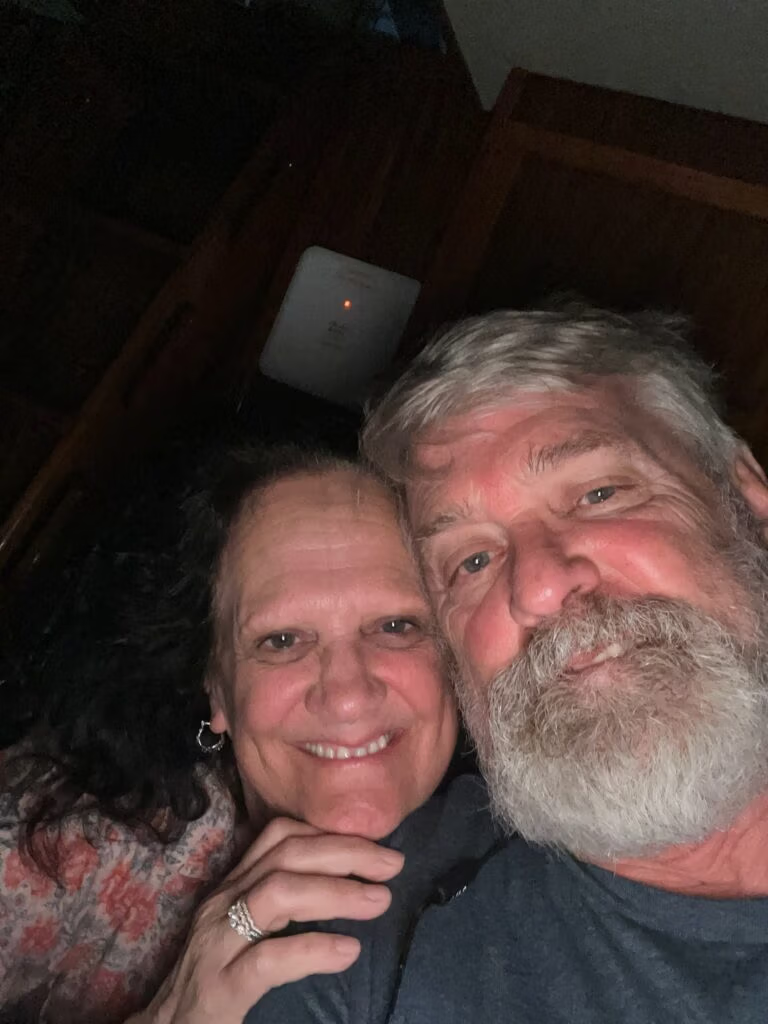
Most of you reading this already know us—Jennifer and me. We both wrapped up our careers in the United States Air Force, Jennifer in 2007 and me in 2008, and then spent several years working overseas in places like Iraq, Kazakhstan, and eventually Vietnam. In 2013 we settled in San Antonio, convinced we were finally retired. That didn’t last long: in 2014 I returned to work in small‑animal medicine and surgery with veterinarian Robert Spillers, and Jennifer accepted a position as a financial analyst with the Department of Defense, so we’ve been at it ever since. Over time, retirement began to feel less like a finish line and more like the start of a new adventure. After years of living around the world, we started talking seriously about buying a boat and running the Inside Passage. The idea of cruising from Seattle to Alaska slowly grew—from a casual “what if” into a detailed plan filled with charts, tide tables, and an ever‑expanding list of boat projects. Before we knew it, that dream of heading north had turned into the next big chapter of our so‑called retirement.
Let The Hunt Begin

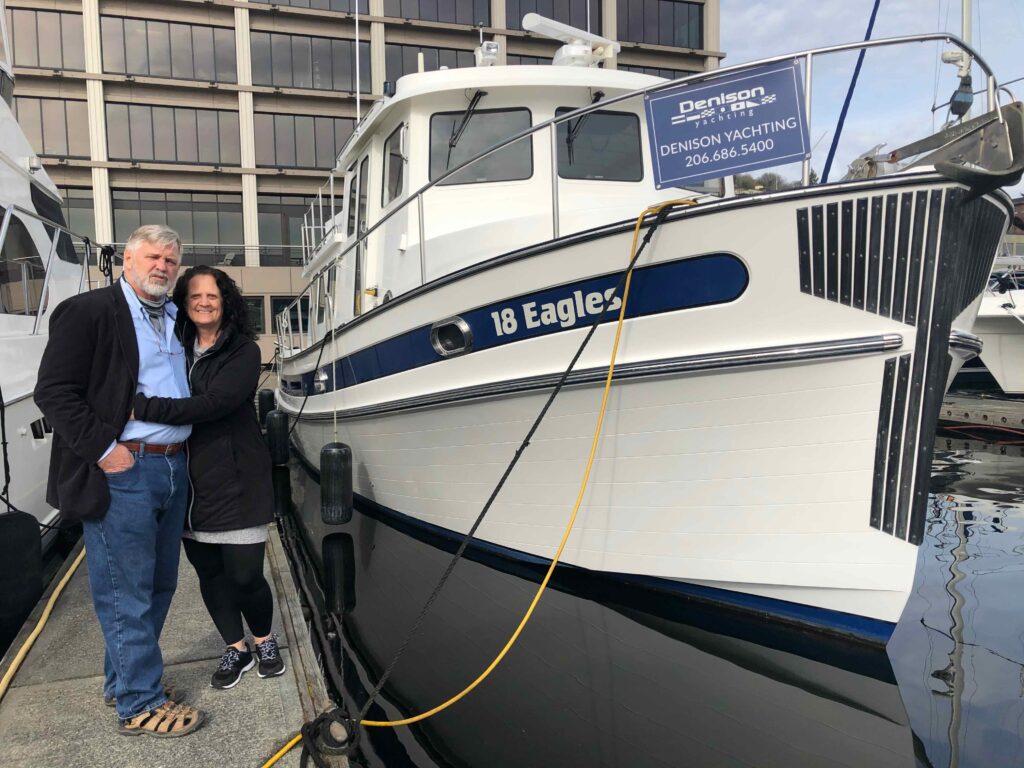
We started seriously looking for a boat in 2020. One of the first boats was 18 Eagles, followed by many more. The Mad Crabber was the first yacht we put an offer on. When you buy a yacht you have a survey done, Mad Crabber was very well kept but when they looked at the engines, they had not been broken in correctly and failed the inspection. We continued to hunt… most of our early looking was in Seattle for obvious reasons but after not having much luck we expanded our search to Flordia, Texas and Louisiana. 

As people ask questions, I will try to answer along the way.  We did not buy 18 Eagles (I really liked this boat) because it only slept two comfortably… so no visitors, what good is that?  

The above picture is from a boat called the “Mad Crabber,”   this boat was very well kept and the first boat we put a bid in on… we learned about the process of buying a boat and used that knowledge as we continued our search.  

We travel to Seattle and Victoria at least six times before we expanded the search to the Gulf of Mexico… we just were not finding that perfect Yacht… Must give Kudos to a fella named Ari Sherr from Seattle.  He works for Denison Yachts, great help. 

FaceBook Ad: 1981 Hatteras Motor Yacht For Sale

I saw an ad one day on the strangest platform, Facebook… there it was 64 foot Hatteras for sale.  This is the size boat I had been looking for, four bedrooms and three heads.  An upper and lower helm.  So I started calling the broker, Greg Worley.  Everything sounded to good to be true, priced a little high but I had to see it.  By now Jennifer was a little tired of following me to see boats… seven hour drive one way, kind of made up her mind.  I reached out to a friend, Dr. Peter Cox and the trip was on… We stayed with Kelly, Jennifer’s daughter while there. 

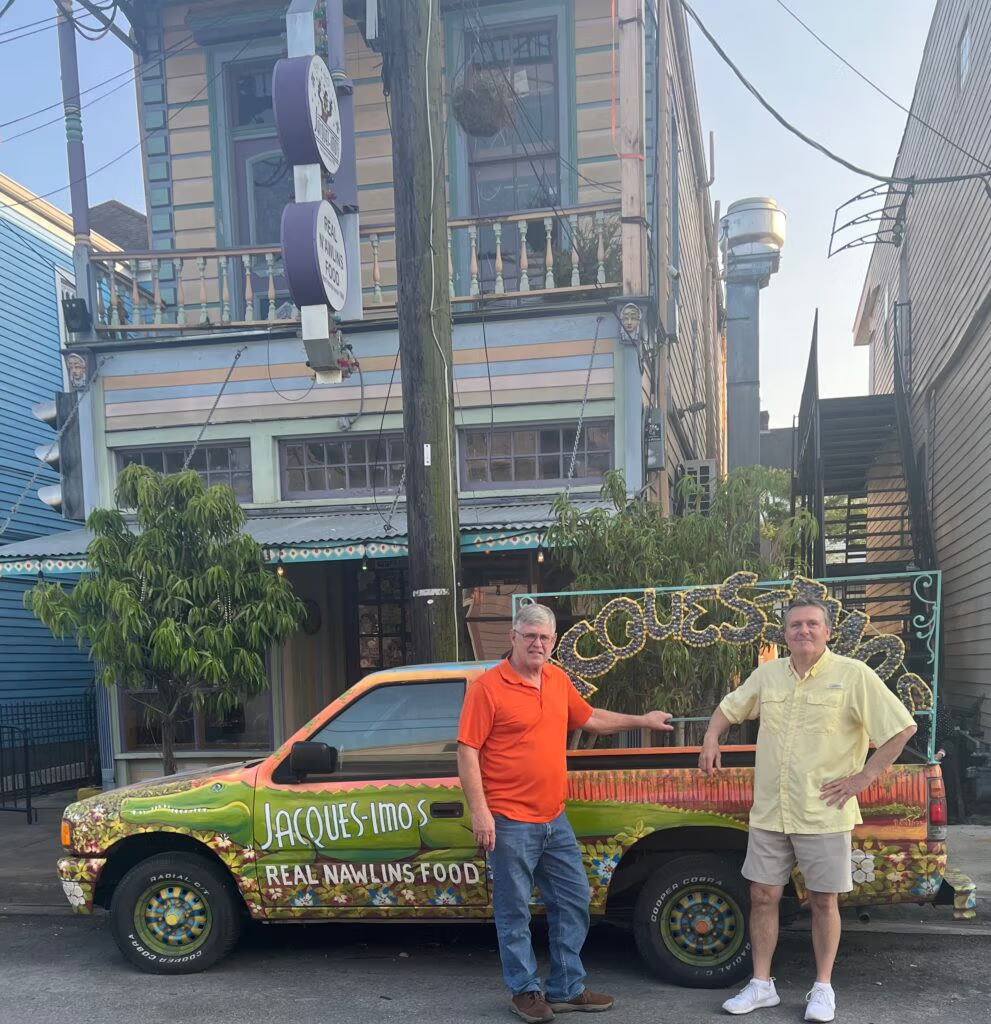
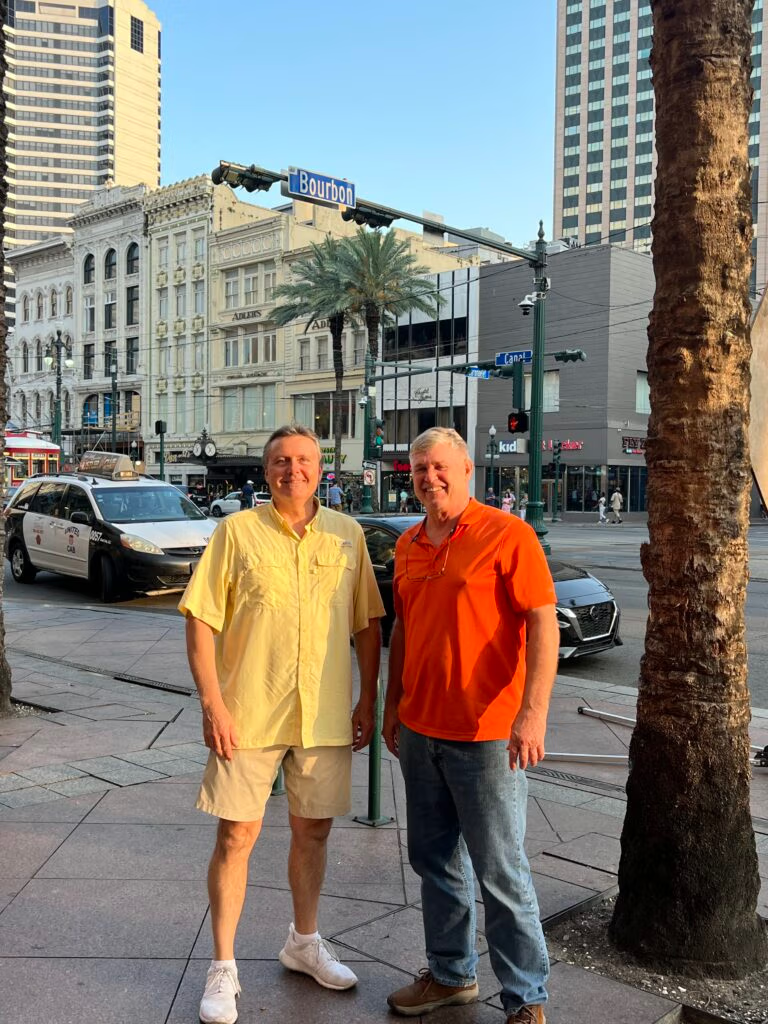
We spent some time in New Orleans, we had to eat at Jacques-Imo’s… We took a stroll on Bourbon Street.  

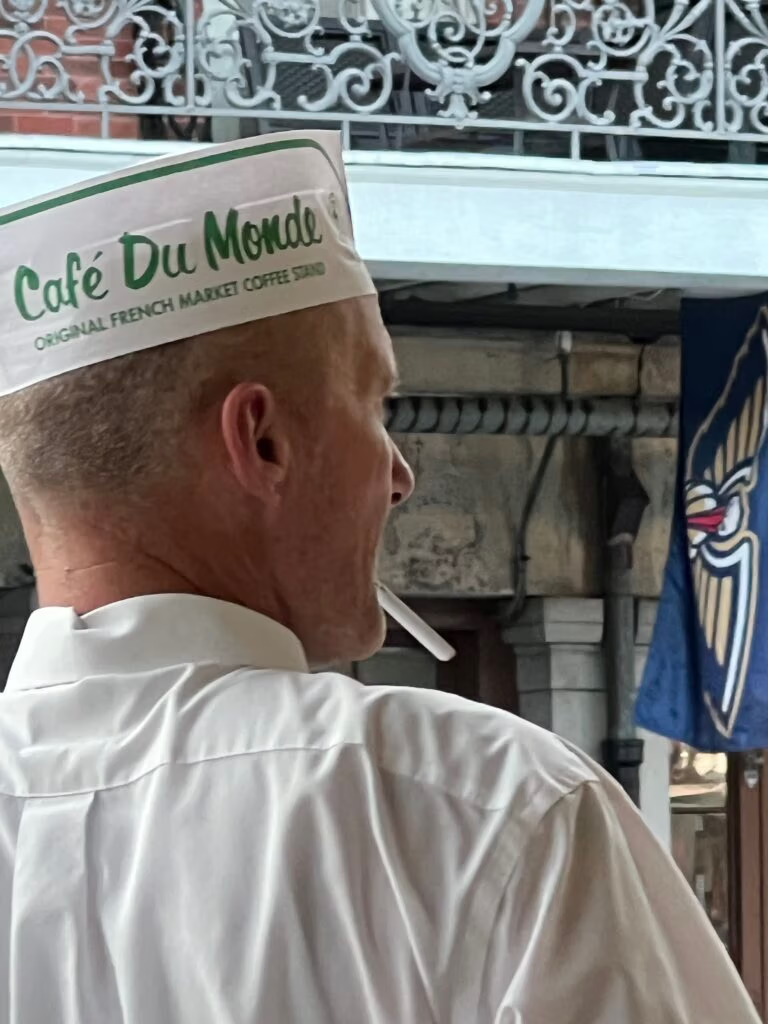
We walked to the end of Bourbon Street and looked at the Mississippi River, paddle wheel boats and such, and got a pastry at Cafe’ Du Monde.  I am not sure but think this was Peter Cox’s first time there. 

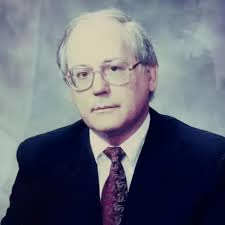
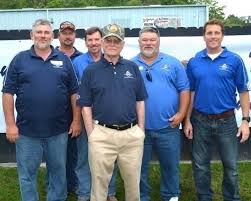
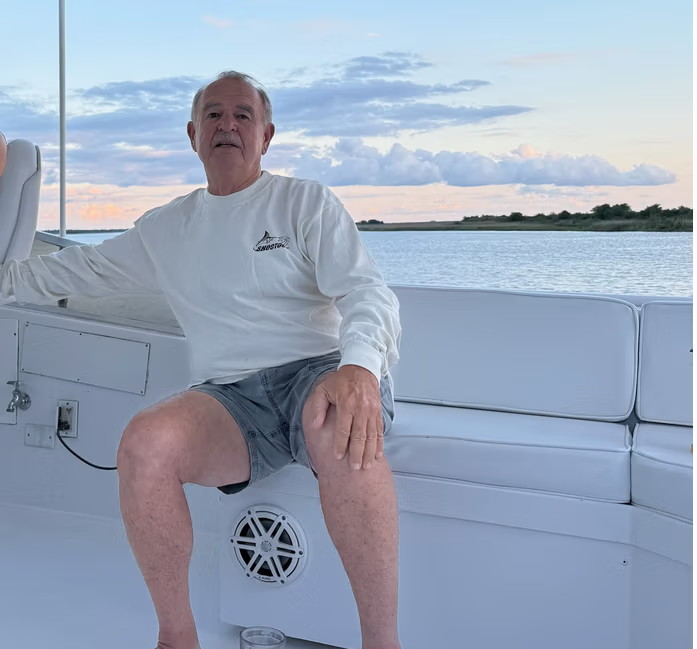
Mr. Boone Kenyon,  the picture is a picture taken at his company and I think better represents the way he would  like to be remembered.  

Seeing The Aku-Aku For the First Time

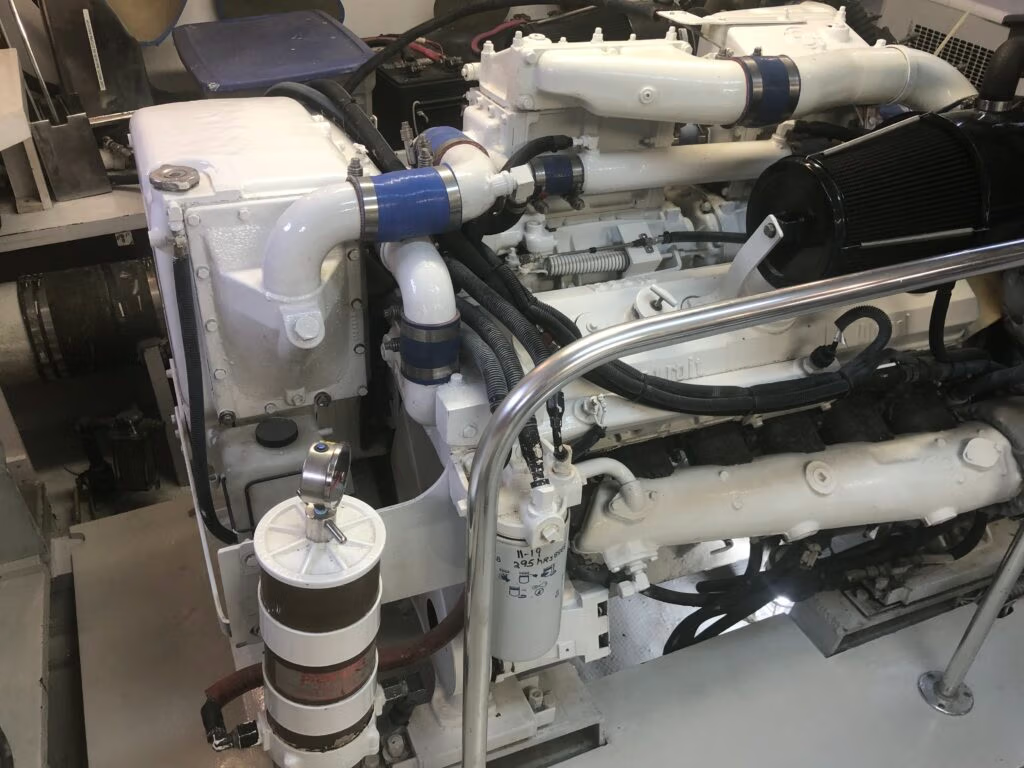
Peter and I met Boone in Bay Saint Louis, Mississippi.  He was having a family outing and showed Dr. Cox and I around the boat.  He was very proud of the engine room… it was spectacular.  He loved the boat and I am glad I got to meet him and feel honored to follow him as one of the owners of this beautiful yacht.

Howard “Boone” Kenyon, a beloved husband, father, grandfather, brother, cousin, uncle, and friend, passed away peacefully on February 14, 2025. Born on January 7, 1943, in Houston, Texas, Boone was the first son born into a growing family where he developed a lifelong love of music, often singing and playing guitar with his many siblings. He was known for his warmth, generosity, and outgoing personality which left an indelible mark on everyone who knew him. Boone attended Allen Military School in Bryan, Texas, and later graduated from Forest City High School in Forest City, Arkansas, in 1960. He went on to attend Tulane University and ultimately earned a degree in English from Louisiana State University. In 1978, Boone founded B&K Construction Company drawing from his experience working for his father’s dredging company. What began as a small subdivision construction business in Baton Rouge soon led to new opportunities, leading B&K into water and sewer line installation, structural concrete work, levee construction, and deep excavation work. Under Boone’s leadership and vision, B&K became a cornerstone of the New Orleans construction industry, playing a vital role in the region’s flood control infrastructure and major civil engineering projects. His entrepreneurial spirit and unwavering commitment to excellence shaped the company’s success and ensured its long-term impact. 

Jennifer's First Visit

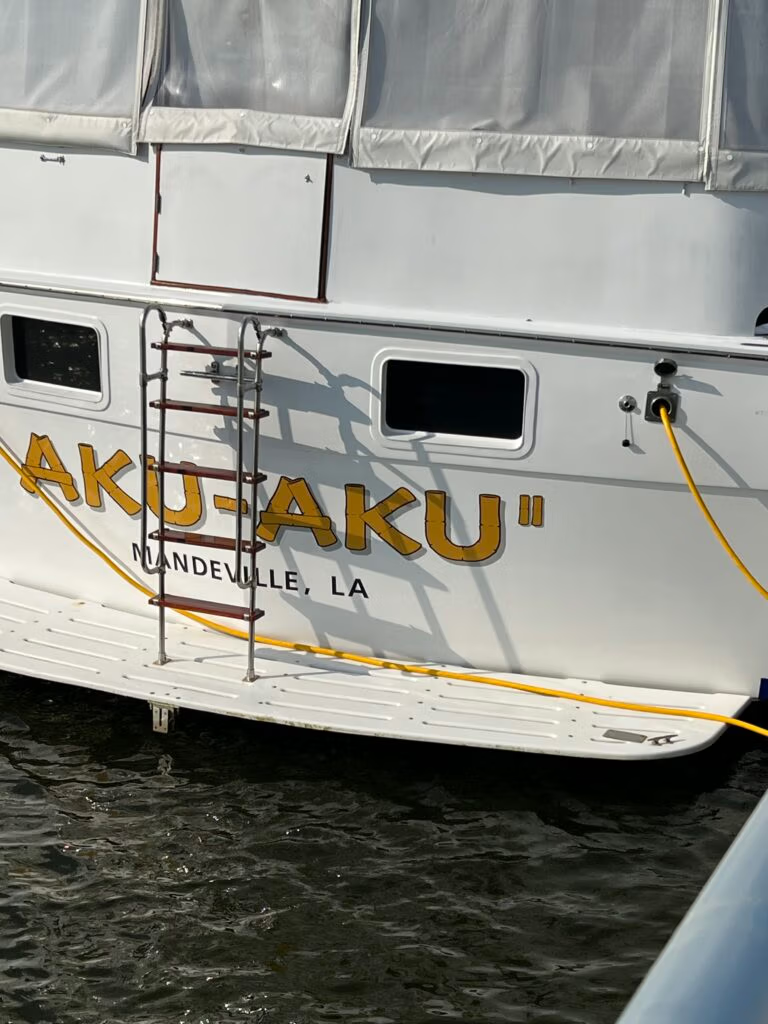
After that first visit, I couldn’t shake the feeling—I had to get Jennifer to Mandeville, Louisiana to see Aku-Aku with her own eyes. In my gut, I already knew she was the one, but this wasn’t a decision I could make alone. We set out from San Antonio, a sense of anticipation riding with us the whole way. Kelly met up with us in Louisiana to ride along to see her. Somewhere along the way, Kelly got seasick—though we still say it was something she ate, not the boat—but even that couldn’t dull the moment. Boone’s reaction caught me off guard; he seemed genuinely taken with Jennifer, almost as if he was quietly rooting for us to be the ones to take Aku-Aku forward. Standing there, the feeling settled in—we weren’t just looking anymore, we had found her. But it wasn’t simple. The price loomed large, Boone didn’t seem quite ready to let her go, and Louisiana was a world away from Seattle. Still, on August 19, 2023, it felt like we were standing at the edge of something bigger than we could fully see, with no real choice but to lean in.
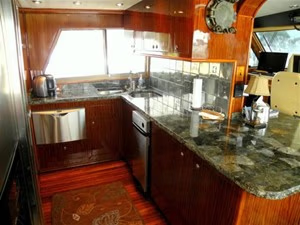
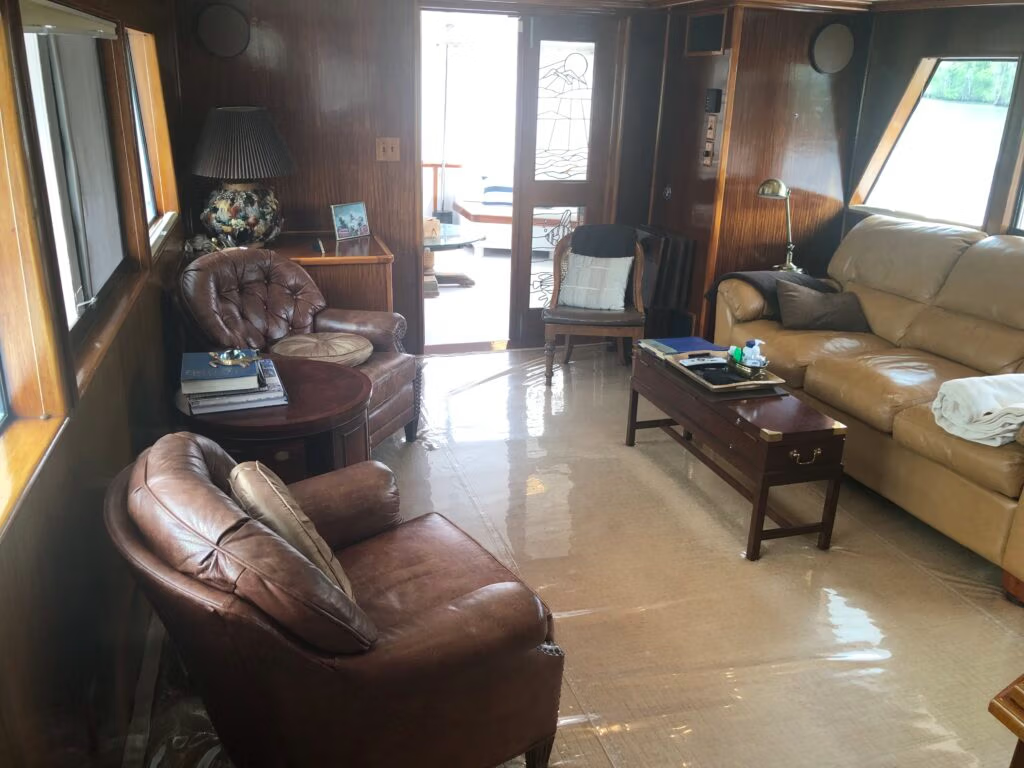
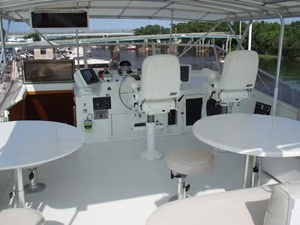
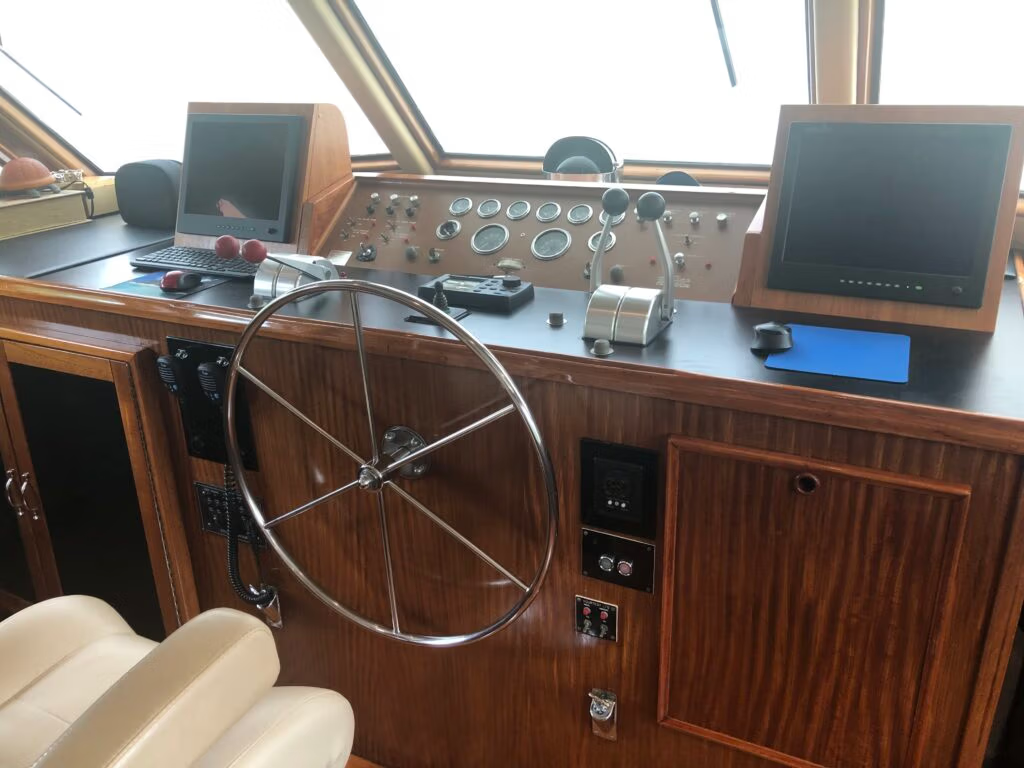
Pictures of Aku - Aku II

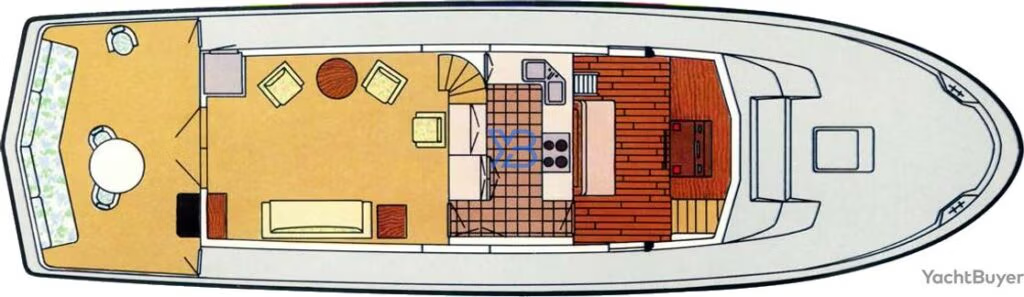
         Left : Galley              Salon to Right 


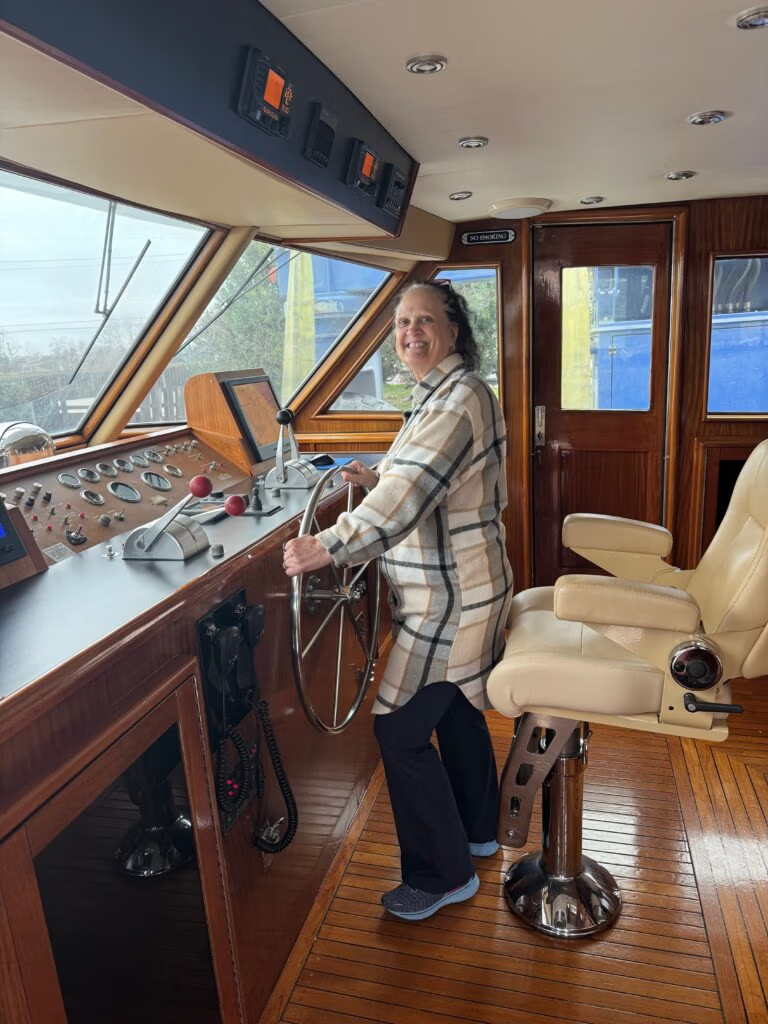
Left Bottom – Upper Helm                                                            


                                       Lower Left: Engine Room 


Lower Bottom : Helm Center 


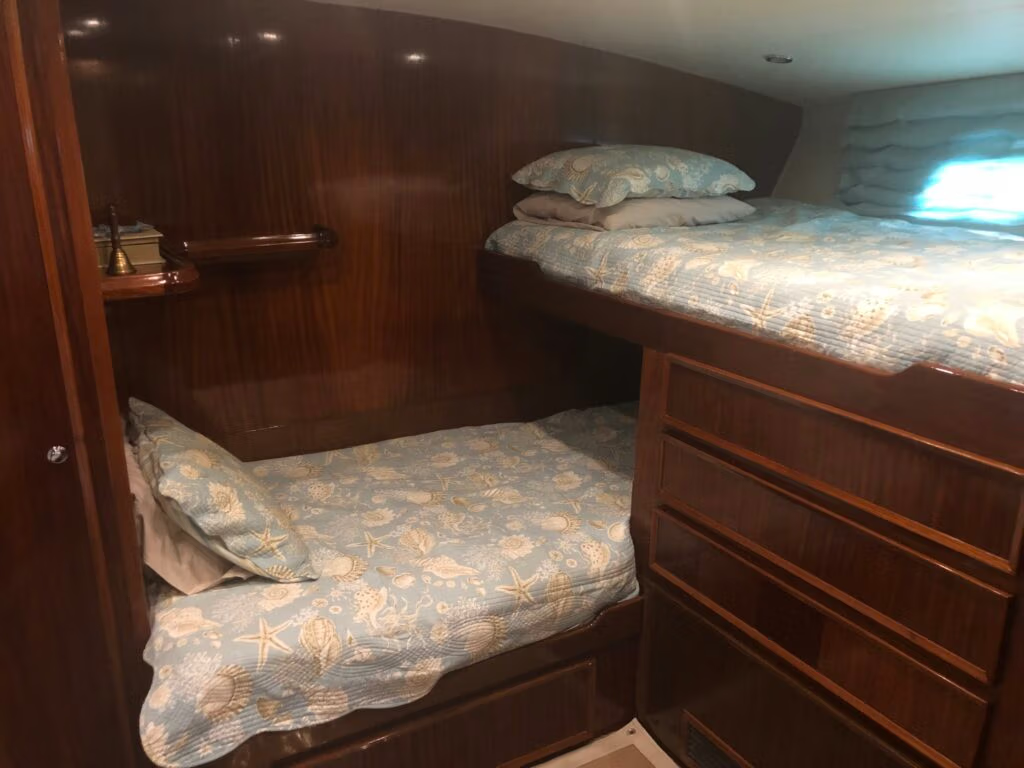
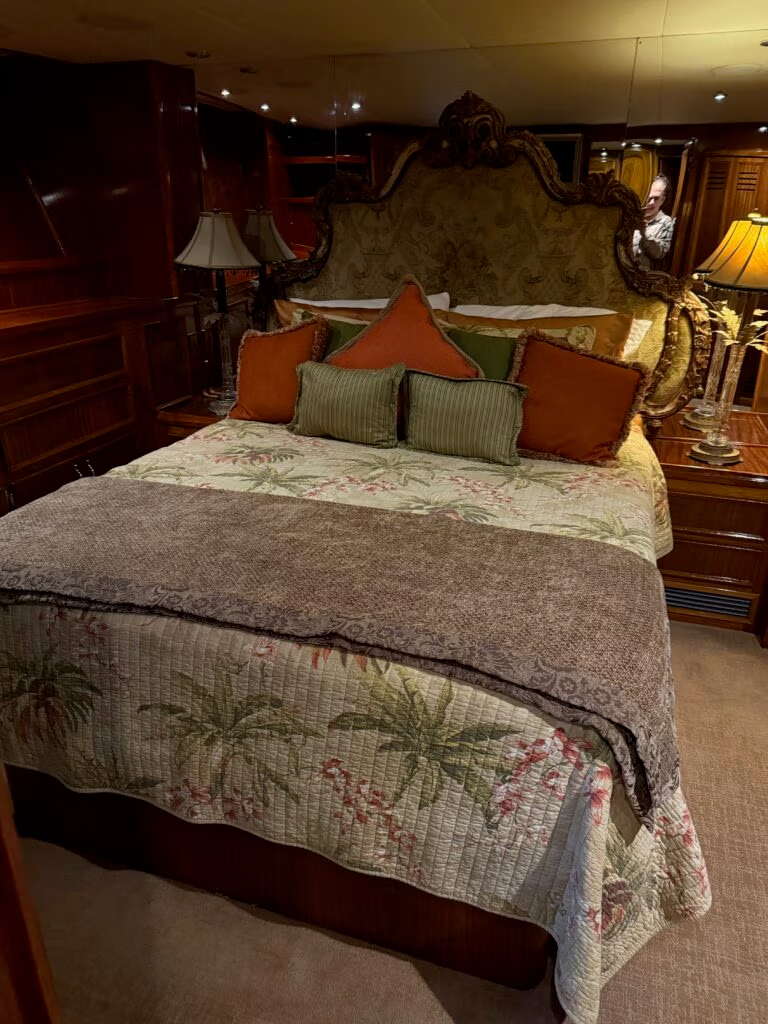
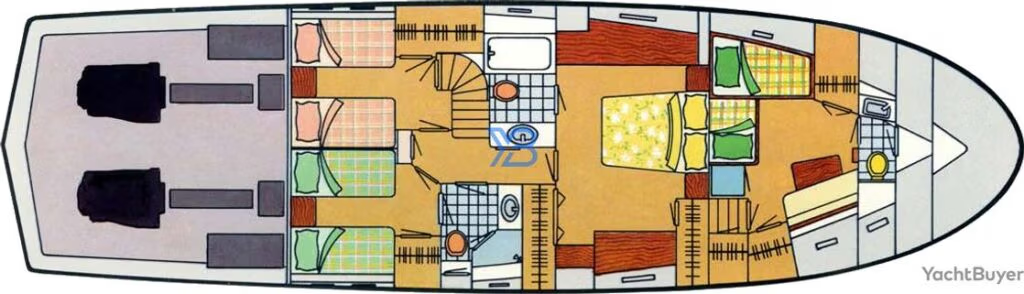
Some of the bedrooms, Crews quarters, master bedroom and design plans for the boat 

The Hatteras 64 Motor Yacht (1980–1985) is a luxury,, 64’10” (LOA) cruiser known for its solid, modified-V hull, 18’3″ beam, and shallow 4’8″ draft, often featuring three or four staterooms and high-performance, twin diesel engines. Designed for comfort and speed, it reaches 25–32 knots (depending on power) and boasts a 1,515-gallon fuel capacity.

Features & Layout
  • Staterooms: Typically features a 3-stateroom layout (full-beam master) or a 4-stateroom configuration, along with 3-4 heads.
  • Design: Features a convex hull shape with propeller tunnels for better performance and a shallower draft.
  • Accommodations: Large salon, gourmet galley with full-sized appliances, and a raised pilothouse.
  • Amenities: Frequently equipped with bow thrusters, stabilizers (some with Seakeeper), and comprehensive air conditioning.
Key Specifications
  • Length Overall (LOA): 64′ 10″ (19.79 m)
  • Beam: 18′ 3″ (5.56 m)
  • Draft: 4′ 8″ (1.42 m)
  • Dry Weight: 116,700 lb
  • Fuel Capacity: 1,515 Gallons
  • Water Capacity: 600 Gallons

The Dance and Survey

When you make an offer on a boat, that’s supposed to be when things start—but only if the owner is willing to let go. Boone wasn’t. He loved Aku-Aku, and honestly, who could blame him? Looking back, I’m not sure he ever really intended to sell her, and the price reflected that—at least from my never-bought-a-boat perspective. I made my offer, Boone came back with his, and the gap between us felt impossible to close. So, reluctantly, we walked away and put Aku-Aku on hold, continuing the search while quietly building the boat fund. Every so often, I’d reach out to Greg, just enough to keep the line alive. Time passed. Then on January 28, 2025, I sent one more message—told him what we had, put it out there, and waited. His reply came back simple and stunning: “Whose name do you want on the bill of sale?” Just like that, everything changed. It was the first time I had ever bought something I couldn’t drive away—and didn’t even get the keys to—but somehow, I knew we had finally found our way back to her.

Once the price was finally agreed upon, everything moved quickly—we wired the money, and just like that, we owned a yacht. The deal closed on February 14, 2025, a day that will always stay with me, made bittersweet by the passing of Mr. Boone Kenyon the very same day.
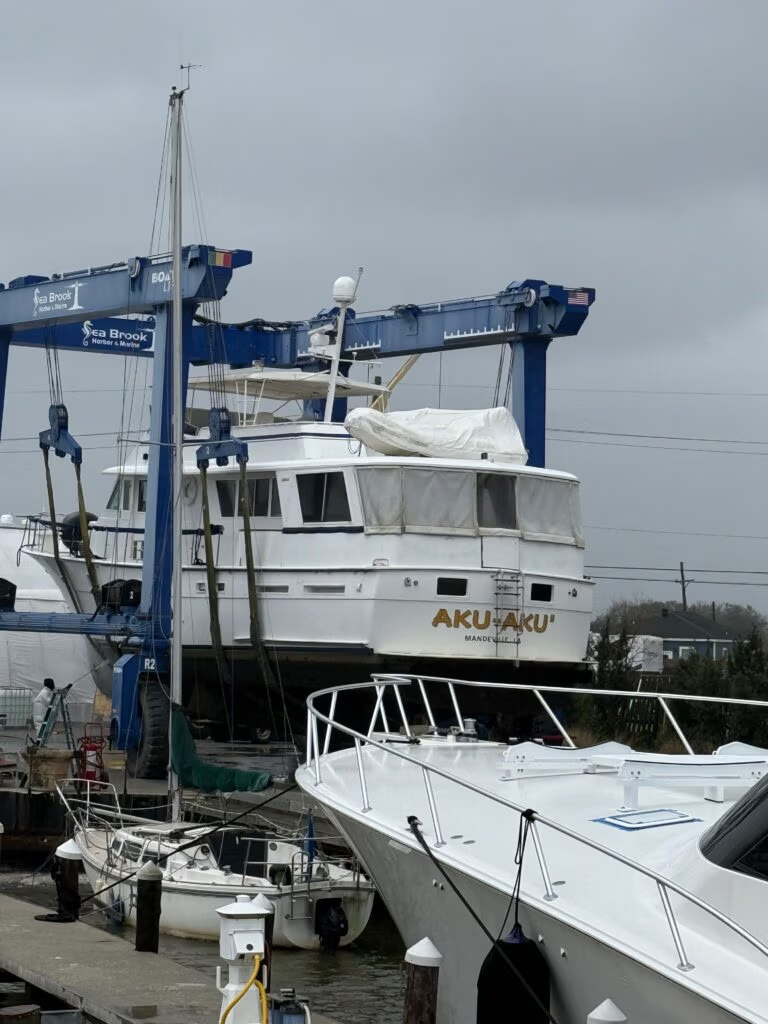
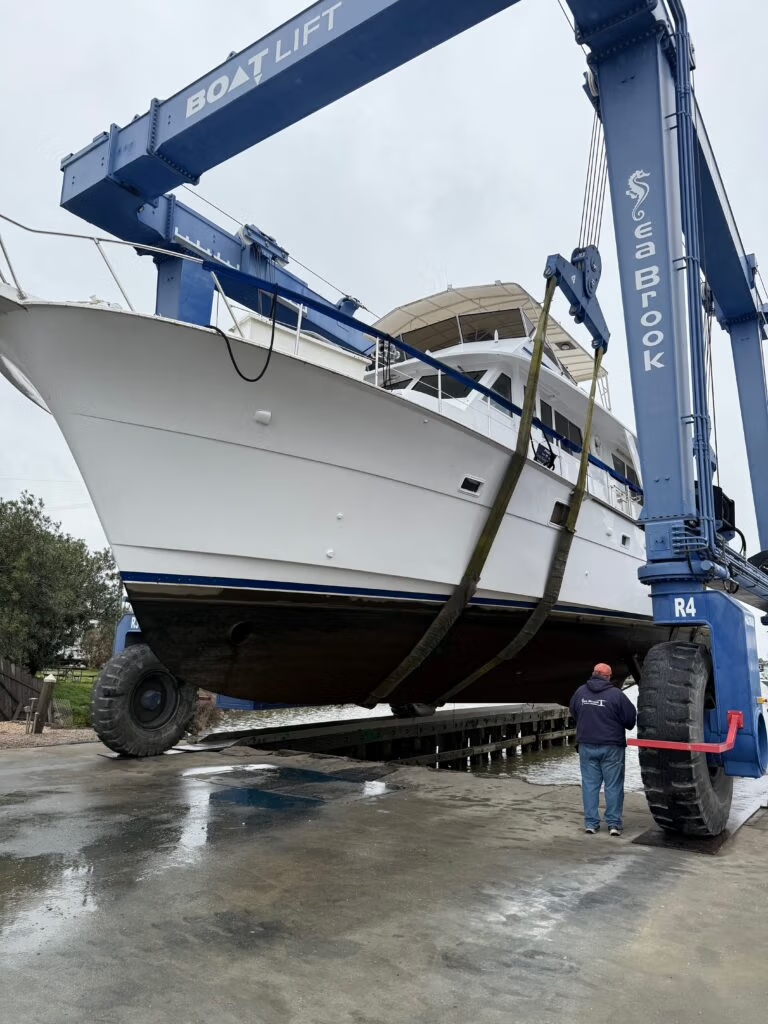
Next came the reality check. We hired Kevin Martin to survey the boat—to crawl through every inch, uncover what was hidden, and tell us what we were truly stepping into. Jennifer flew to New Orleans to be there in person for the inspection. February 19 was bitterly cold, a sharp contrast to the excitement we carried in with us. The survey didn’t disappoint—it revealed a list of issues that couldn’t be ignored, each one pulling us back into negotiations. After some back and forth, we reached an agreement and turned our focus to moving forward. Arrangements were made with Seabrook Marina to begin the repairs, but it was clear this wouldn’t be quick or easy. The list was long, and the work would take a month or more—another reminder that this dream was going to demand patience as much as passion.

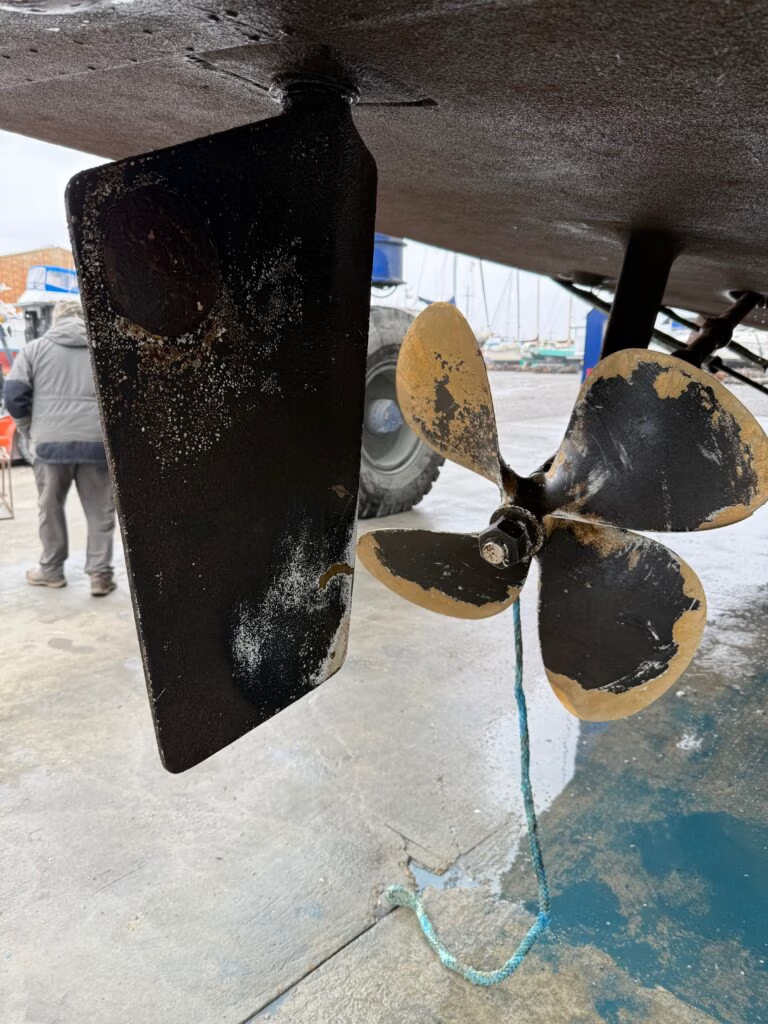
Part of the Survey is taking her out of the water, with a boat this size this is a major undertaking and requires special equipment.  In the picture below you can see a blue rope hanging from the propeller.  The propeller has a line cutter attached to it to cut ropes if you should snag one, ours had broken as your can tell, we had it replaced.  Also on the rudder is a black circle towards the top this is a zine anode and these have to be updated and protect the boat from metal erosion from electricity.  
New Orleans to Corpus Christi

After Seabrook Marina finally worked through the long list of repairs, we turned to the next big step: moving her from New Orleans to Corpus Christi, where she would become our classroom as much as our home. It had taken more than two months to get to this point, and even then, the yard was still wrapping up work the day before we were set to leave. We had hoped to bring in Marty Weid, Boone’s longtime captain and the person who knew Aku-Aku better than anyone, but he was off in the Bahamas running a charter. Instead, he pointed us to Capt. Ron—Ronald L. L. Moolenaar—who had overseen much of the repair work and already knew the boat inside and out.
On May 6, we headed out for sea trials with Capt. Ron and Marty on board, a true moment of truth for all of us. Thankfully, everything checked out, and Aku-Aku handled herself well. On the way back in, we stopped at the fuel dock—our first real taste of operating at this scale. The landing was a bit harder than planned, and the fuel bill rang in at $1,309.17, a small but unforgettable reminder that this journey, in every sense, was about to get very real..

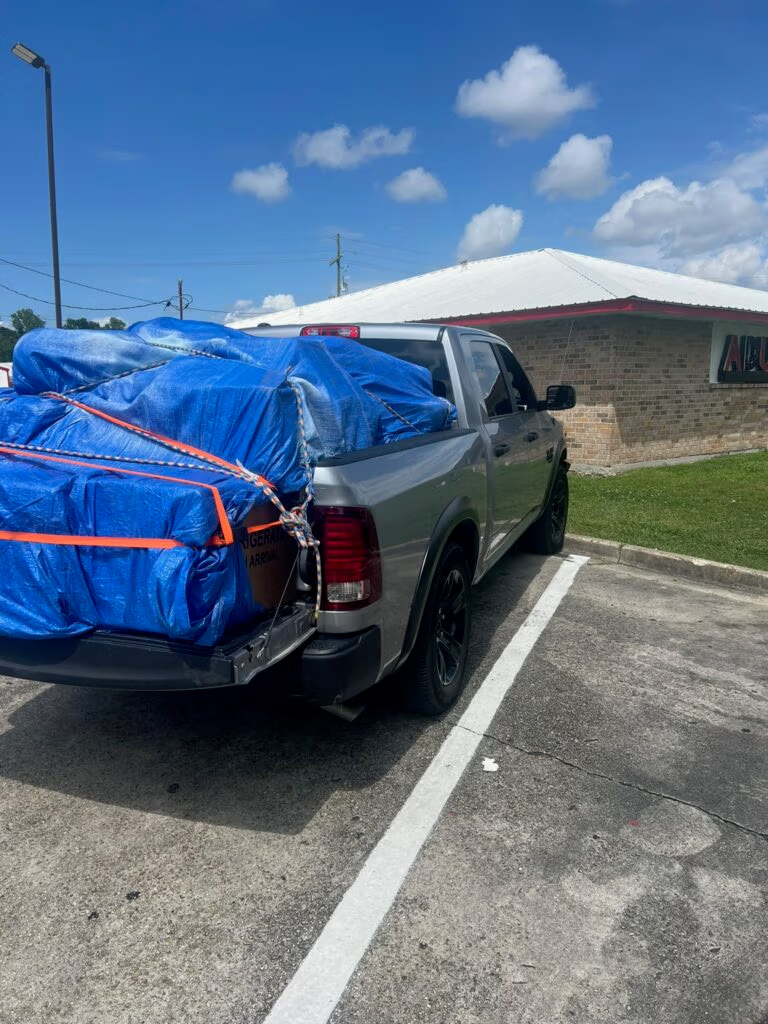
We pulled the crew together—Jennifer; Dr. Peter Cox and his wife, Valerie; my nephew, Matt Sturdy; Capt. Ron; and me—and pointed ourselves toward New Orleans. On Friday, May 3, Peter, Val, Jennifer, and I stuffed the truck with more bags than any four people reasonably need and hit the road, rolling into town later that day to meet Matt and Capt. Ron at the dock.
There was no easing into it. Aku-Aku needed help everywhere you looked—deep cleaning, systems checks, and the kind of double- and triple-checking that makes you wonder why you ever thought owning a boat was a relaxing idea. It was long, physical work, but underneath the sweat and bleach fumes there was a charge in the air, a sense that something real was finally beginning. We dove in on May 4, aiming ambitiously for a departure on the 6th or 7th.
At that point, our understanding of the boat and her systems was, to put it kindly, theoretical. If I’m being honest, I didn’t even know how to start her; yes, I had bought a yacht and had no idea where the “on” button was. I tried to look like a confident captain, but mostly I was hoping no one would notice I was staring at the helm the way most people stare at the cockpit of a 747. As it so often goes on the water, though, Mother Nature was already cooking up her own plans—and she doesn’t take suggestions.

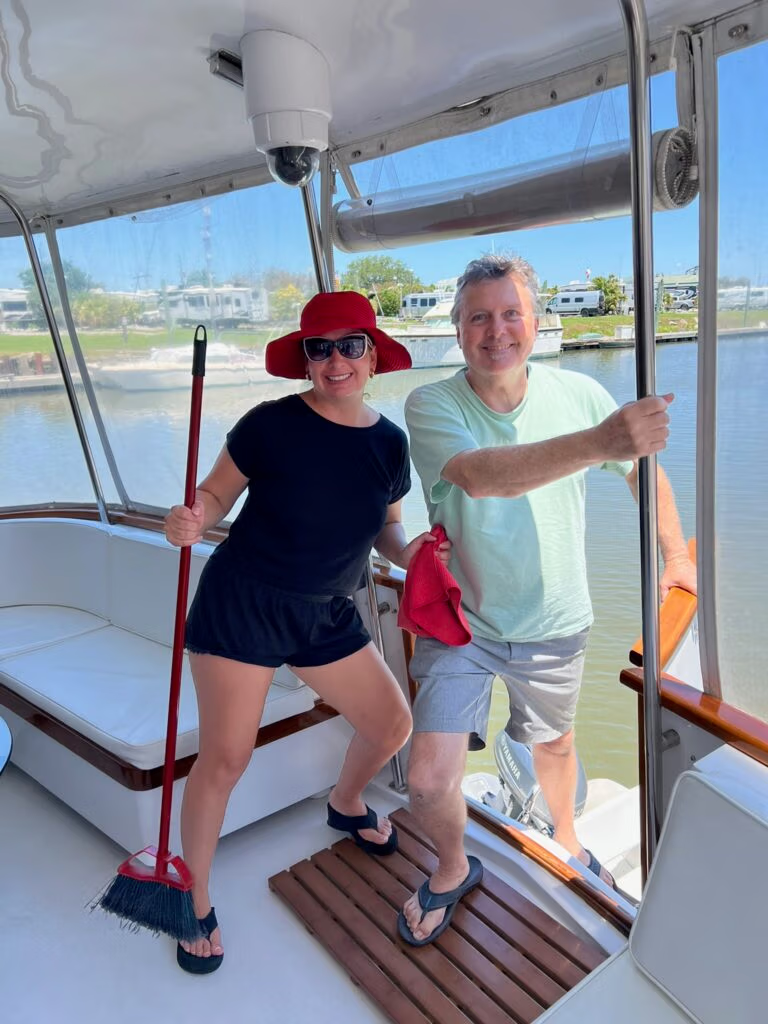
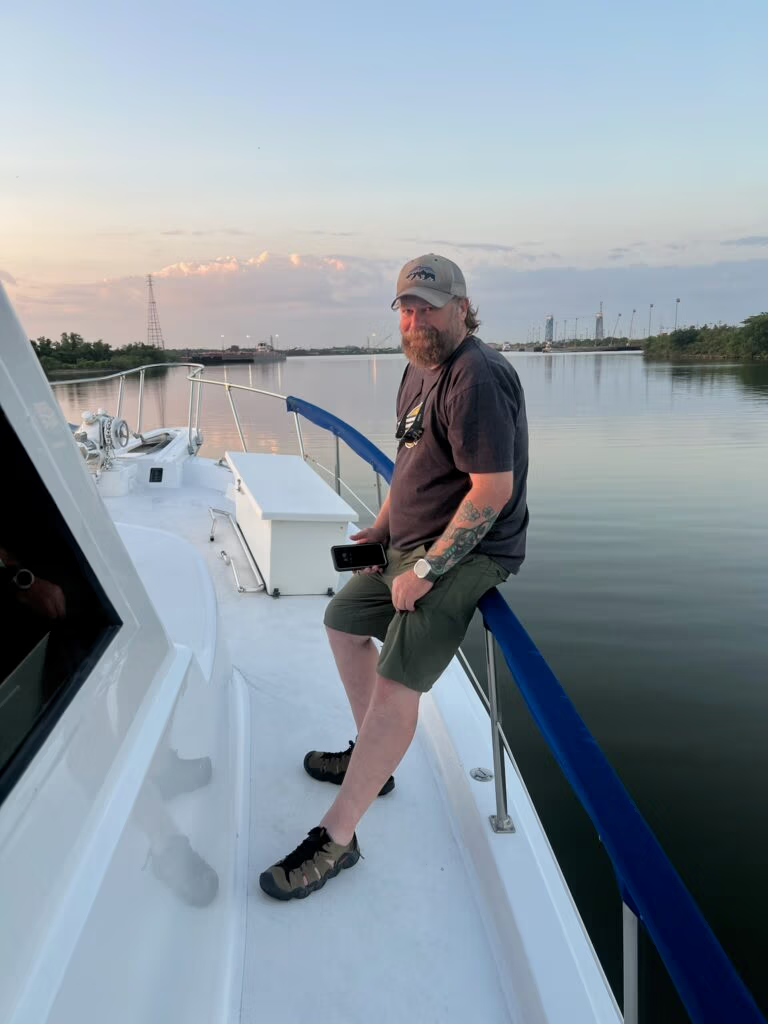
The Crew

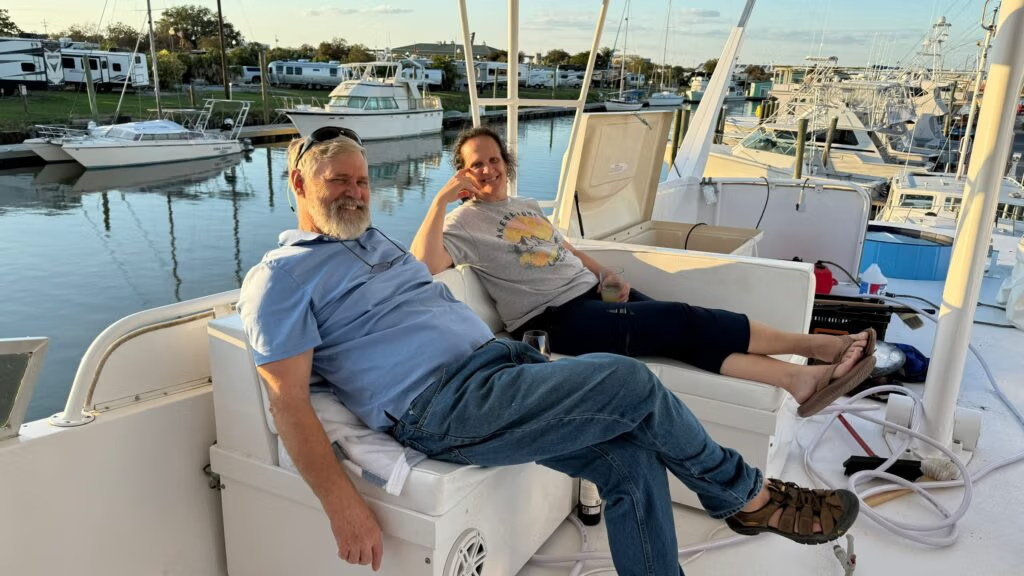
Mike and Jennifer Bunning

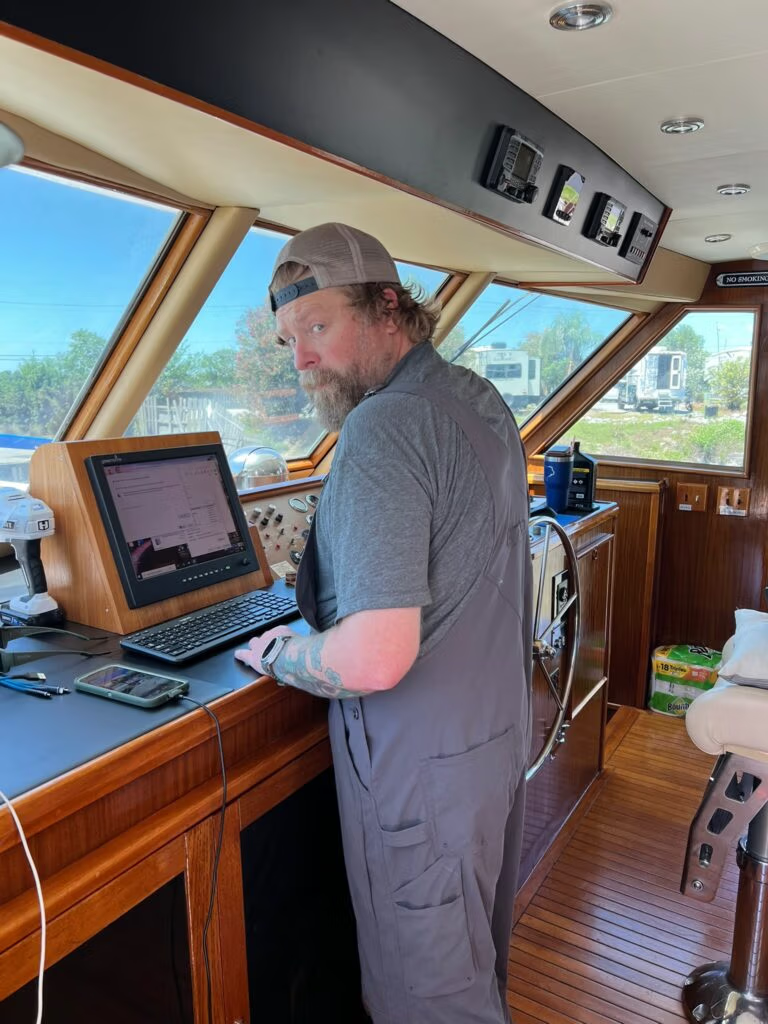
Capt Ron 

Matt Sturdy 

Peter and Val Cox


8 May 2025, Day One

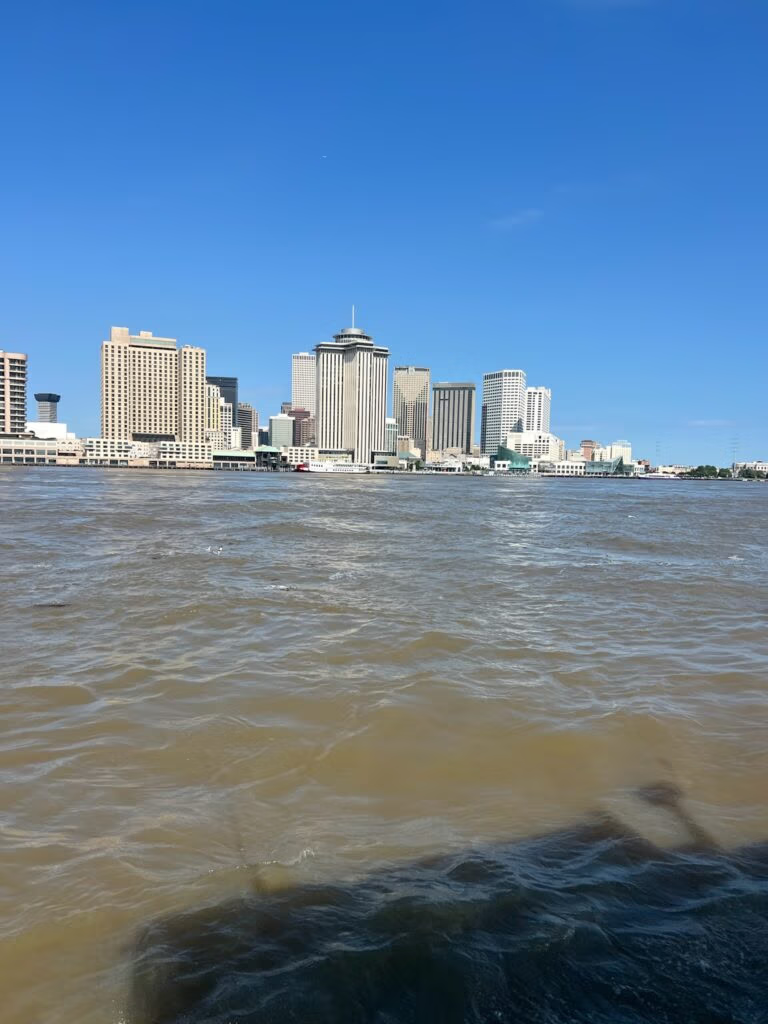
Day One was a flood of new experiences, but nothing compared to crossing the mighty Mississippi. It’s one thing to read about it, to drive over it, or to watch it slip by from 30,000 feet—but being on it is something else entirely. You can feel its power, its depth, its history moving beneath you. In that moment, all those stories I’d ever known about the river came rushing together, but still fell short of the reality. The Mississippi isn’t just a river—it’s a presence, full of force and quiet mystique, and crossing it felt like stepping into something far bigger than ourselves.

The IntraCostal Waterway

The Gulf Intracoastal Waterway between New Orleans and Texas represents a remarkable feat of 20th-century engineering that transformed coastal transportation in the region. Originally known as the Louisiana-Texas (La-Tex) Intracoastal Waterway, this section stretches approximately 500 miles from New Orleans to the Texas-Louisiana border and continues through Texas to Brownsville. The waterway connects through Harvey Lock in the New Orleans area, which serves as the official mileage reference point for the entire Gulf Intracoastal Waterway system.
Construction of this vital corridor began after congressional authorization in 1923 and was finally completed in 1949, though the concept had been discussed as early as 1873. The waterway was designed to be 9 feet deep and 100 feet wide, providing safe inland navigation for commercial, civilian, and military vessels without the dangers of open Gulf waters. The Louisiana segment alone spans 302.4 miles from the Texas state line to New Orleans, winding through coastal marshlands and bayous. This engineering marvel became especially critical during World War II when German submarine attacks on merchant ships highlighted the urgent need for protected inland shipping routes. Today, the Texas portion of the waterway moves nearly 86 million tons of freight annually and links more than 20 Texas ports, making it one of the nation’s most important commercial transportation arteries.

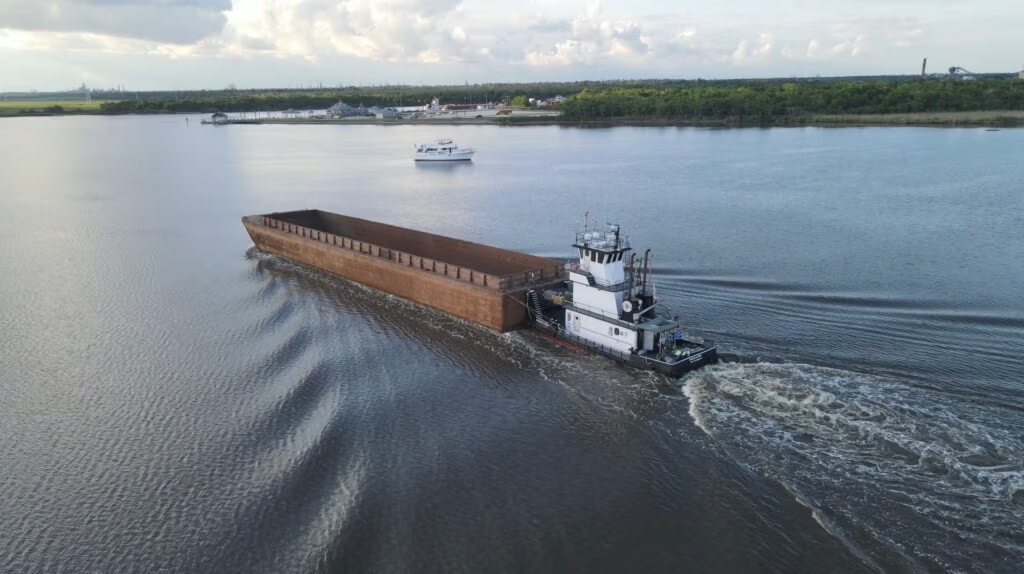
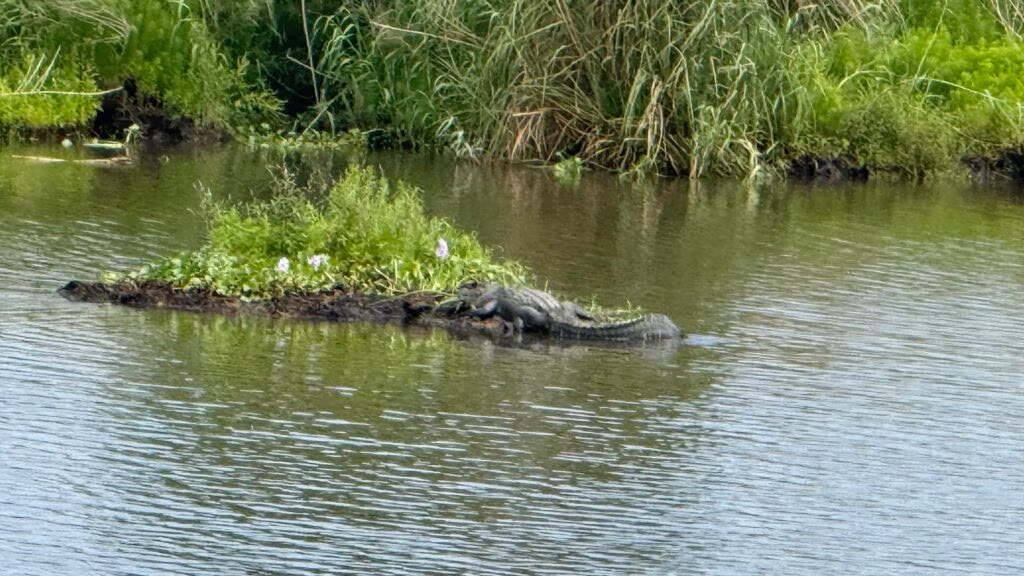
The scenery was unbelievable, birds of every variety, alligators, huge barges.  Small towns tucked away and always the odd remnant of a sunken boat or a loss memory.  It was everything Mark Twain had ever written about.  Twain wrote in Huck Finn, sometimes we’d have that whole river all to ourselves for the longest time. Yonder were the banks and the islands, across the water; and maybe a spark—which was a candle in a cabin window… It’s lovely to live on a raft. We had the sky up there, all speckled with stars, and we used to lay on our backs and look up at them, and discuss about whether they were made or only just happened.”  Then I remembered we were on a yacht… just dreaming. 

By the end of the day, we pulled into Morgan City, Louisiana, completely worn out. It had been a long push, and you could feel it in every step. Part of the crew crossed over the water hoping to find something to eat, only to come back empty-handed—everything was closed. Even getting tied up turned into an ordeal. The ladder fight alone felt like a comedy of errors, pieced together in the dark with more effort than success. I have a feeling that was the moment Capt. Ron knew—if he hadn’t already—that we were as green as they come.
Morgan City itself sits at the crossroads of the Atchafalaya River and the Gulf Intracoastal Waterway, a place shaped entirely by the water around it. Once called Tiger Island, and later Brashear City, it played a surprisingly important role during the Civil War, serving as a Union stronghold to disrupt supply lines from Texas. Standing there, exhausted and a little humbled, it felt like we were just passing through a place that had seen far tougher journeys than ours.
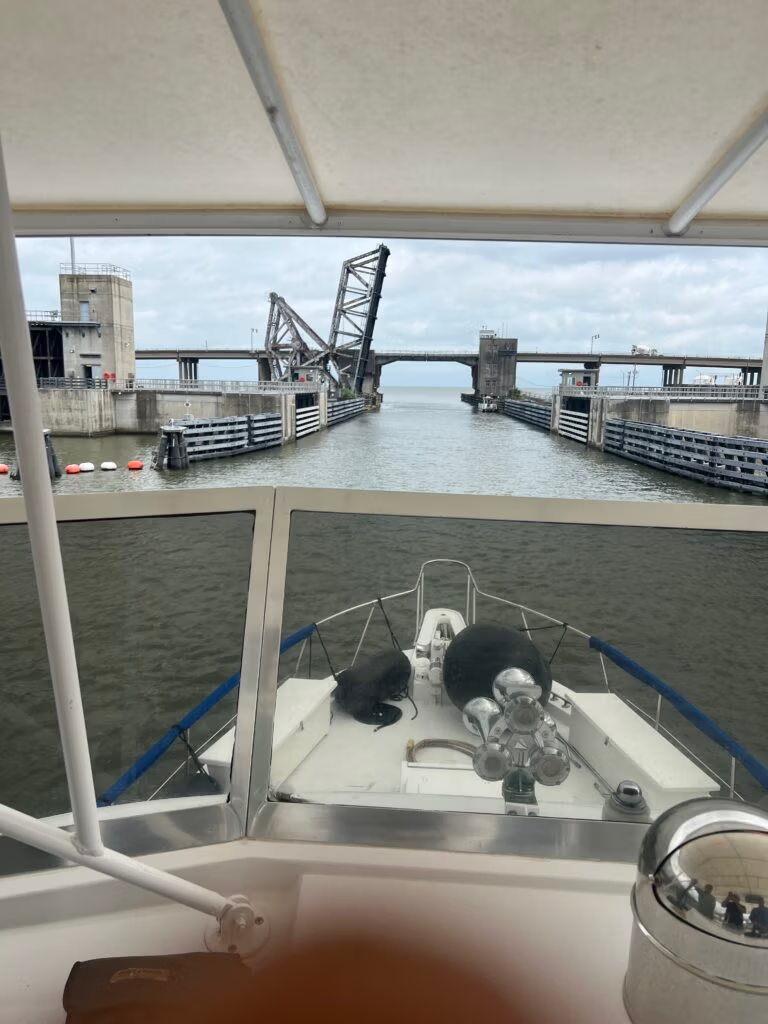
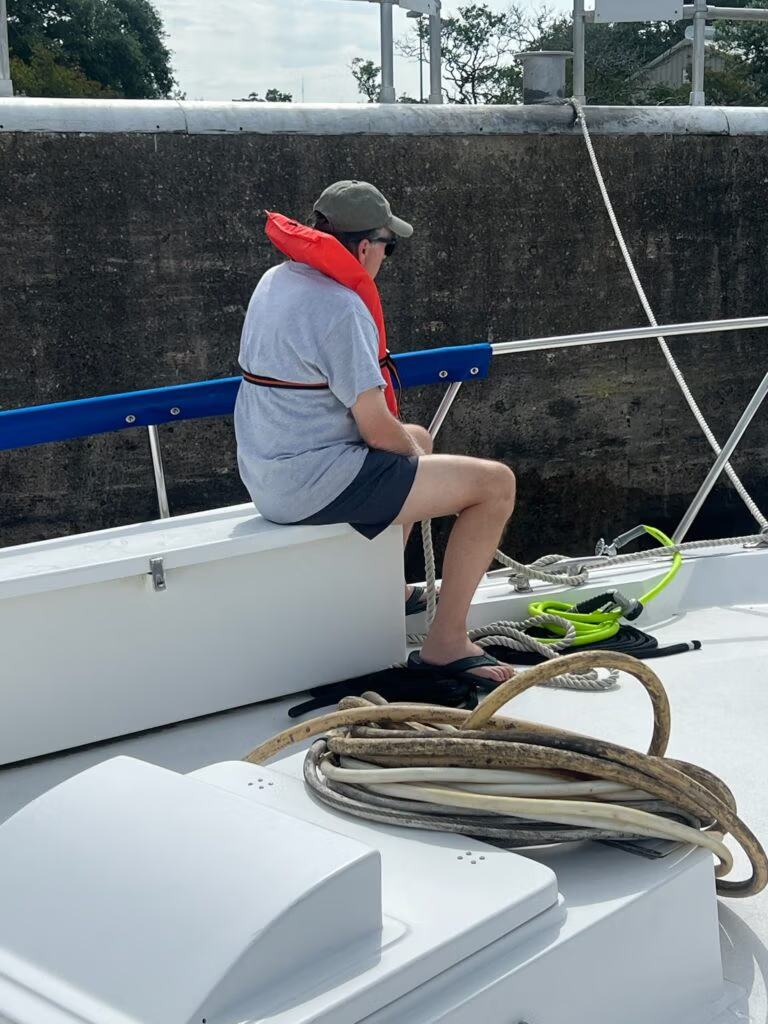
And the photo—Peter in that oversized life jacket—captures the moment perfectly. Every time we entered a lock, regulations said we had to suit up, and those jackets were… substantial. Safe, no doubt, but not exactly built for comfort. We’ve since upgraded to something a little less bulky, but at the time, it was just one more reminder that we were learning as we went.
We slipped out of Morgan City early the next morning and continued along the Intracoastal Waterway. A light rain followed us for a while, but it passed quickly, leaving behind clearer skies and a quiet urgency. The delay in New Orleans had put us behind, and now we were feeling it—we needed to make up time. But the Intracoastal has its own pace, and it doesn’t bend for anyone. Locks, barges, and narrow stretches through dock-lined communities kept us in check, reminding us that speed wasn’t really an option.
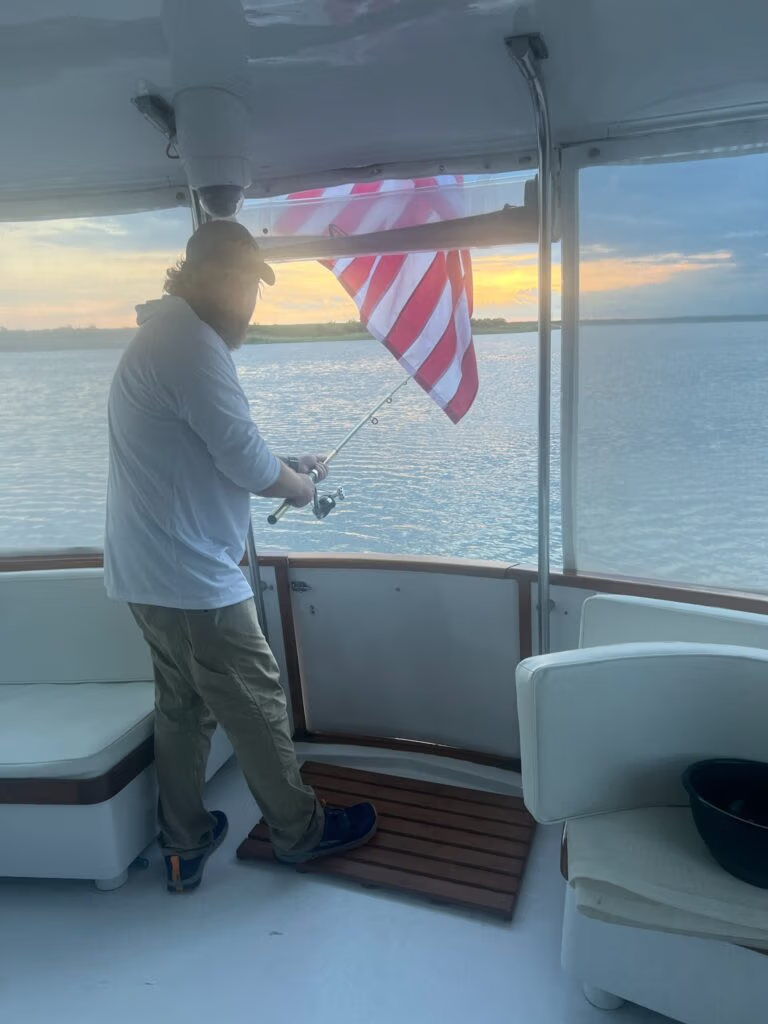
By the end of the day, we reached Choupique Island and decided to anchor out for the night—our first time doing it on our own. There was something different about that moment, a mix of accomplishment and just enough uncertainty to keep us sharp. Matt dropped a line in the water and, before long, was pulling in fish none of us could quite name, which only added to the sense that we were far from familiar ground.
With Corpus Christi still ahead and a hard deadline—Sunday, May 11—we made the call to cross the Gulf and make a straight run for it. It felt like a turning point. We cooked dinner, kept it simple, and turned in early, knowing the next leg would ask more of us than anything so far.
Crossing Gulf, Day 10-11, First Overnight

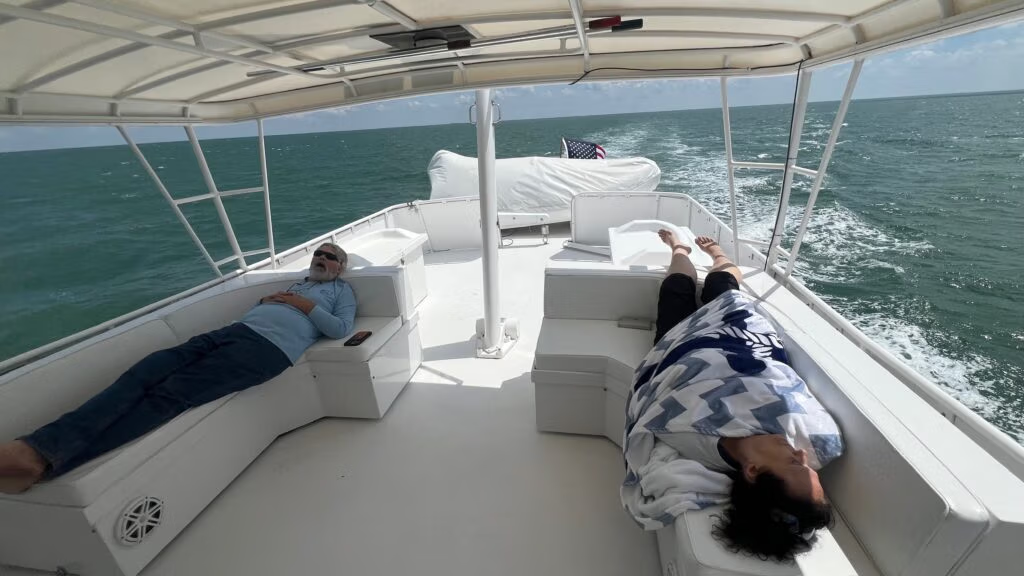
We left very early the next morning and headed south to find a cut into the Gulf. We cleared the cut and entered the Gulf around 10 a.m. on Saturday, May 10. The waves were only about 2–3 feet, hitting us on the starboard midships, but Jenn and I didn’t fare very well. We never actually got sick, but lying down felt pretty good. At that point, none of us had ever done an overnight at sea, (except Capt Ron, I hope)  so everything felt new.
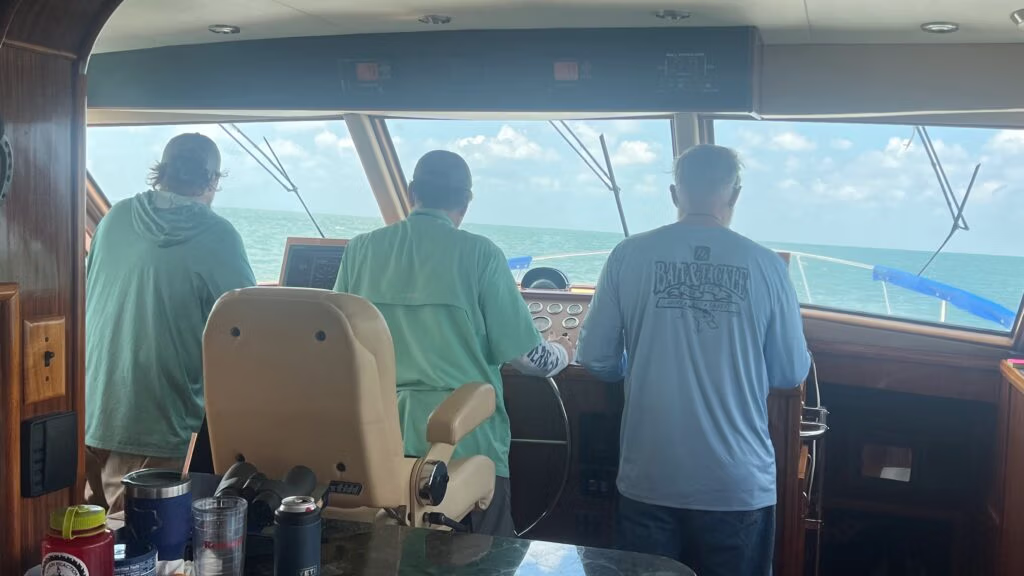
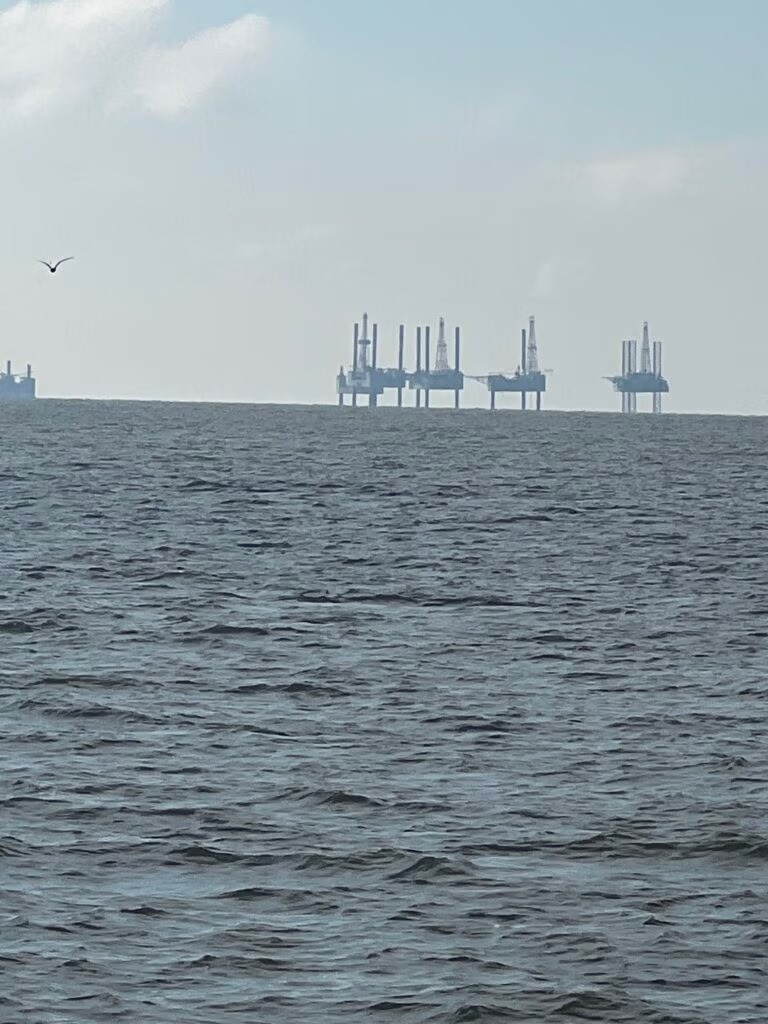
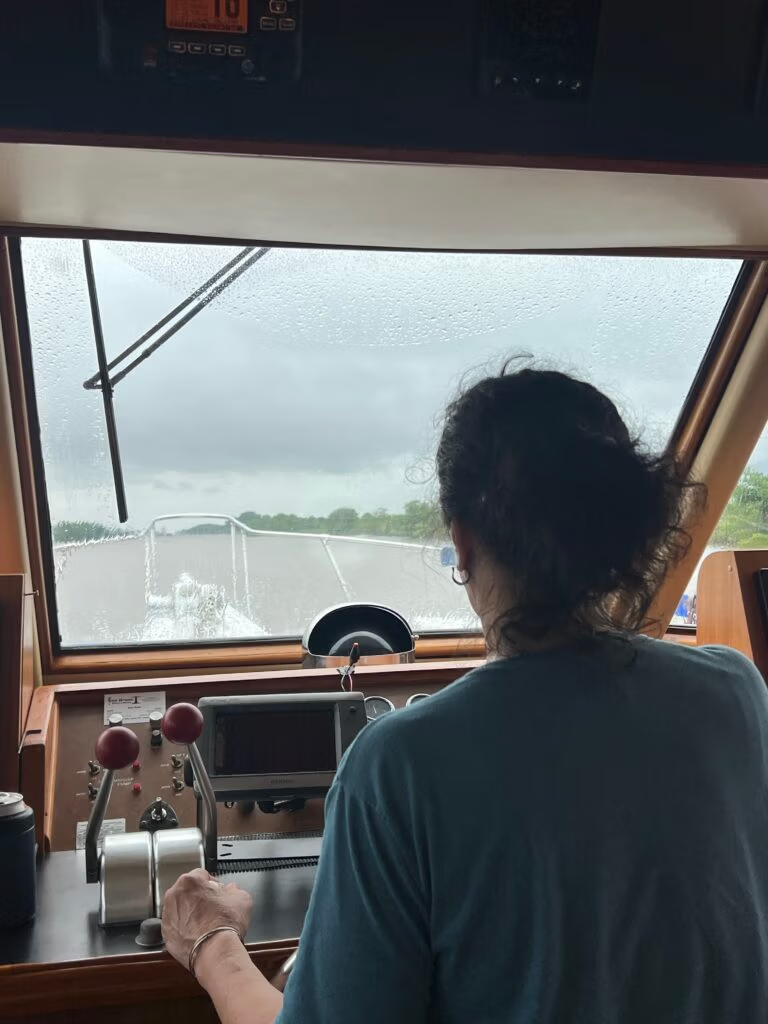
We took turns at the helm, and for the most part the day/night  was uneventful. We split into three‑hour shifts: Capt. Ron took 9–12, Peter and Matt had 12–3, and Jenn and I stood the 3–6 watch. There are oil rigs scattered throughout the Gulf, so we kept the radar on and our eyes glued ahead, making sure we didn’t run down on one of them in the dark.

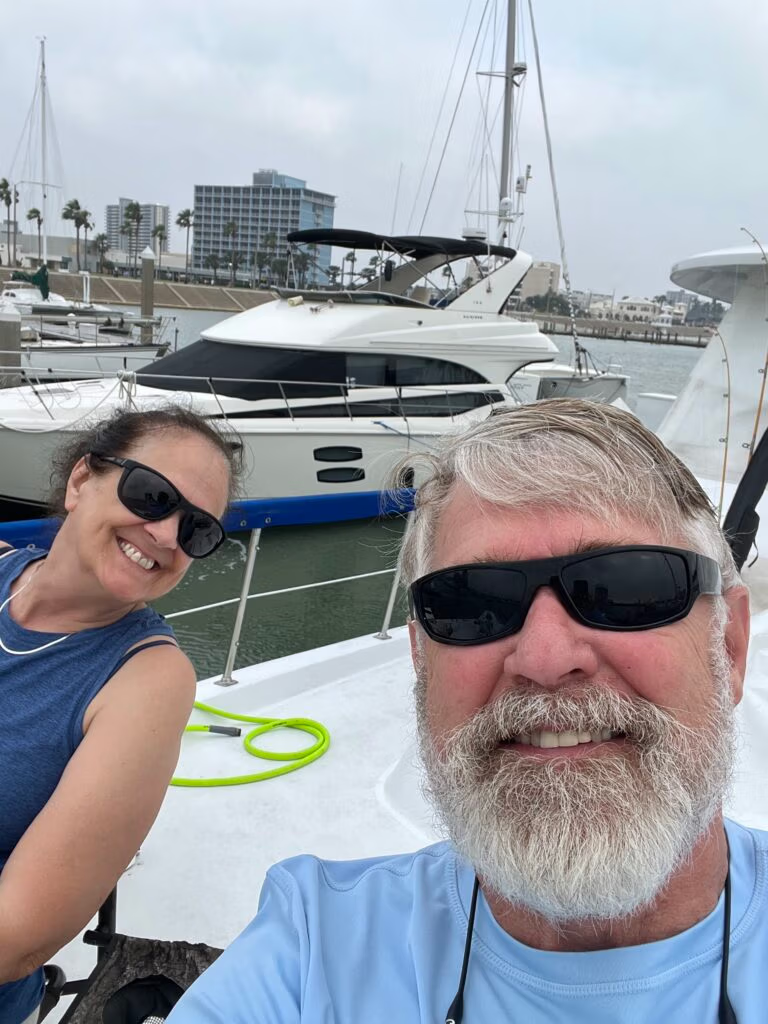
Corpus Christi.... Slip E-22

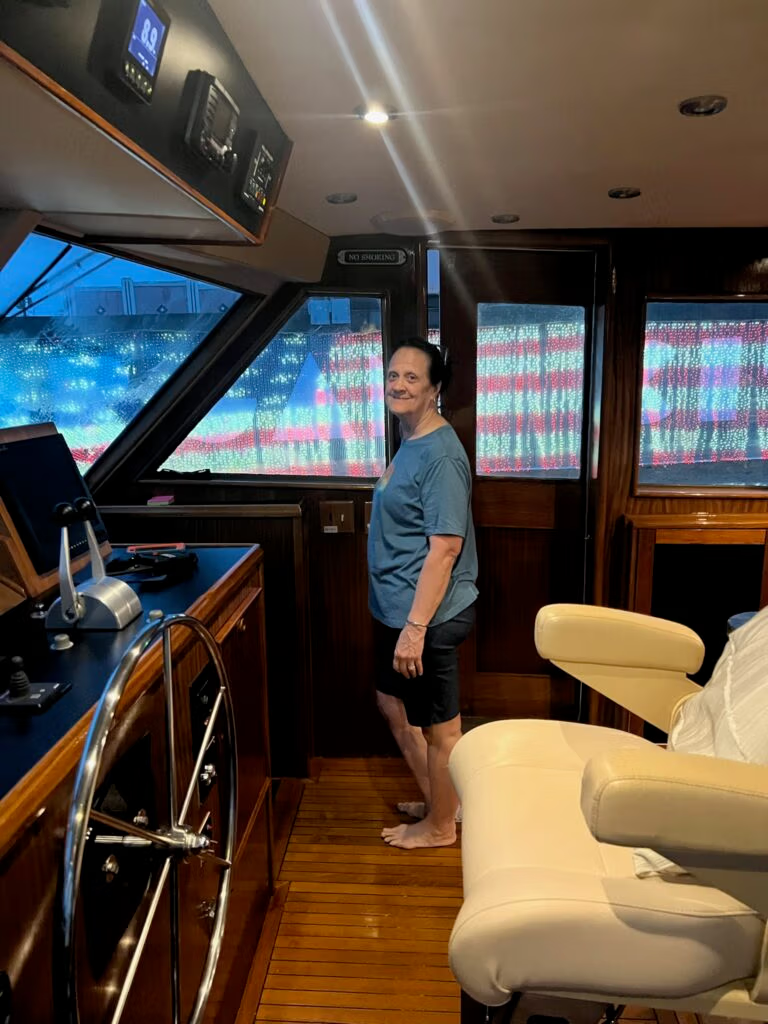
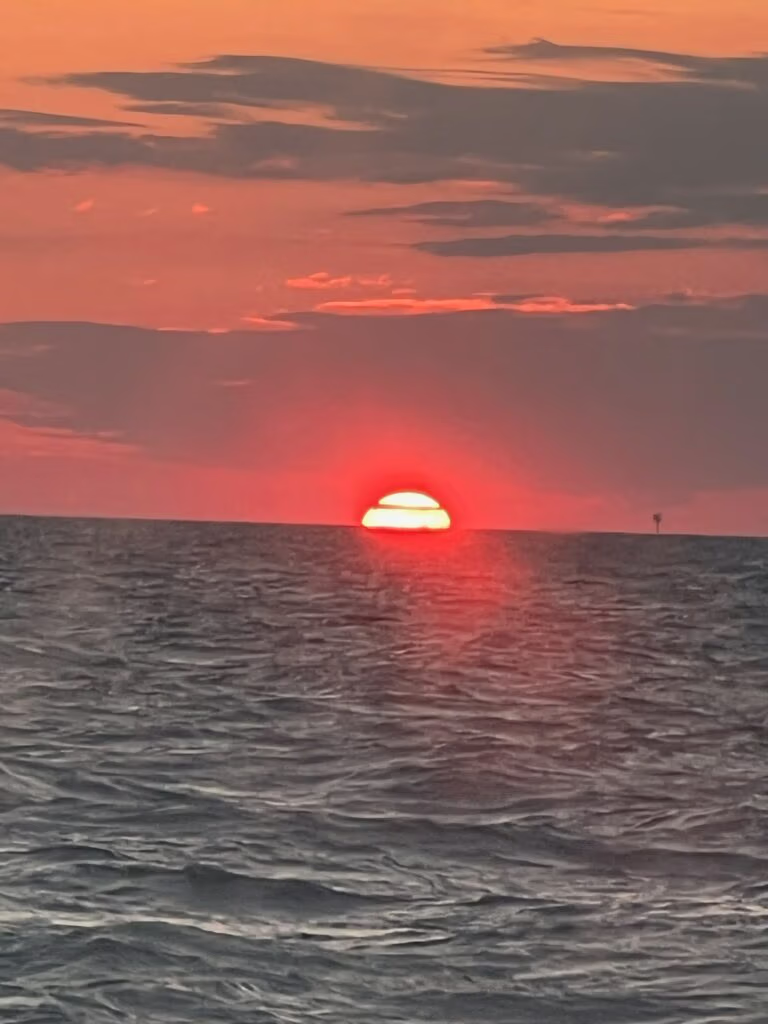
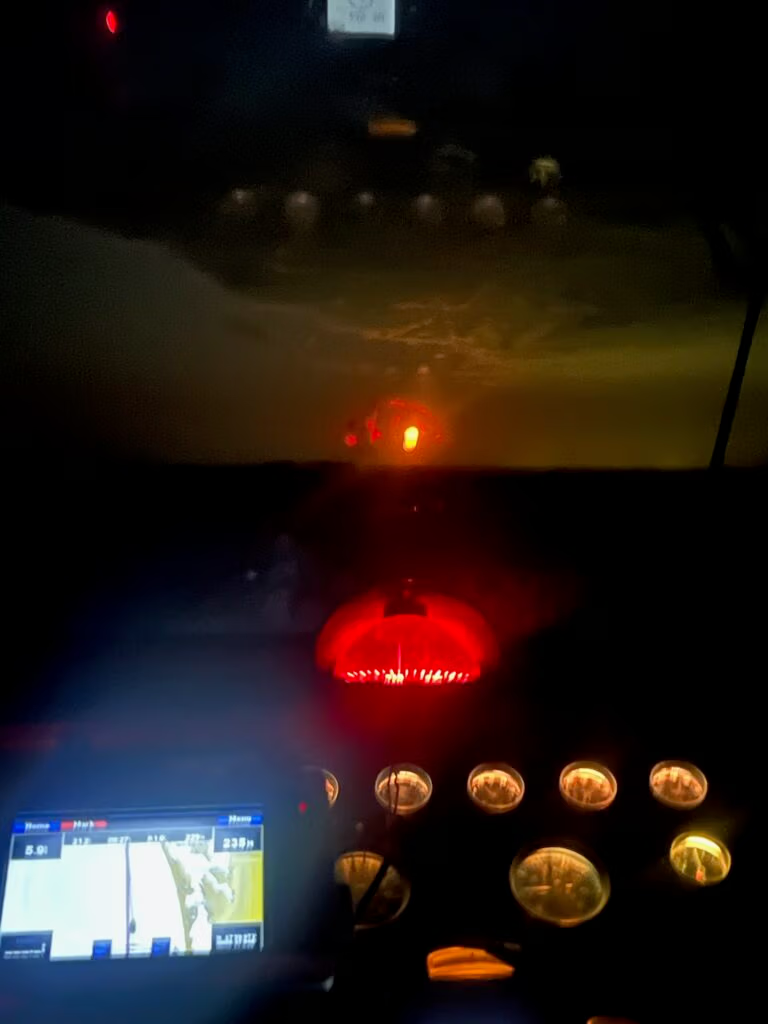
This is what it looks like at night, this does not show the radar but shows the compass and some of the engine gauges. 

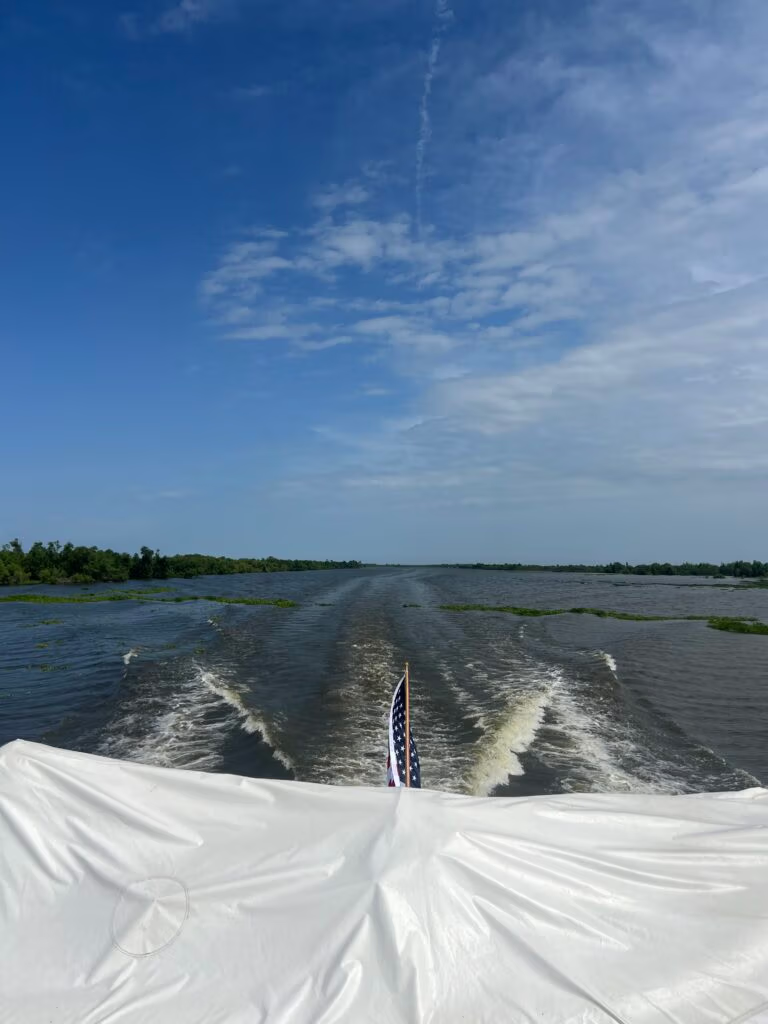
I would highly recommend the Intracoastal waterway.  My favorite part was the cyprus swamps.  Around every corner was a new sight, wildlife everywhere.  When we get tired of the Northwest we may want to slip back down and do the Intracoastal all the way North to Boston.   

When people ask why we chose such a big boat—a 64‑footer with four staterooms and three heads—I think back to a moment in The Fugitive where the marshals are talking about how brilliant Dr. Richard Kimble is. One of them pushes back and basically says, “He’s too smart,” and the others answer, “We’re smart. We’re smart too. We’re some smart guys. We are,” and that line has always stuck with me as a kind of quiet permission to grow into big, complicated things we don’t yet fully understand. I looked at this boat, saw that it had everything we wanted, could comfortably host visiting friends and family, and had the range and capability to take us all the way from Seattle up to Anchorage in real liveaboard comfort, and I decided this was our “we’re smart too” moment. Every mile since then has confirmed it was the right decision, but it’s also meant stepping into an entirely new universe of systems—electrical, mechanical, navigation, and more—where each day seems to present some fresh puzzle to solve, sometimes exhilarating, sometimes overwhelming. Yet that constant learning curve is exactly what keeps this adventure interesting: the boat demands our focus, humbles us regularly, sharpens our skills, and in the process somehow manages to keep us feeling a little younger, more alive, and more awake to the world than we were before we ever stepped aboard

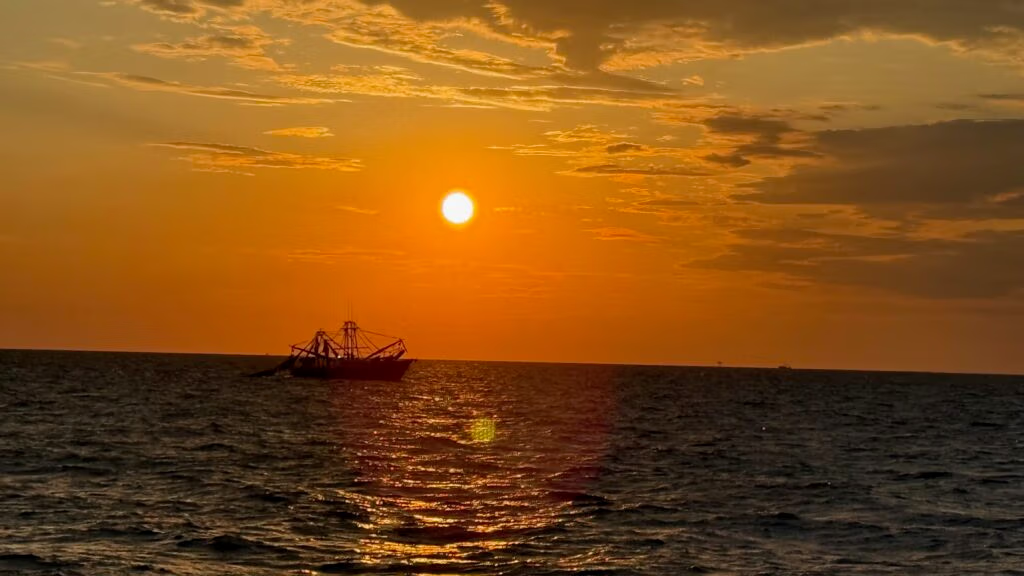
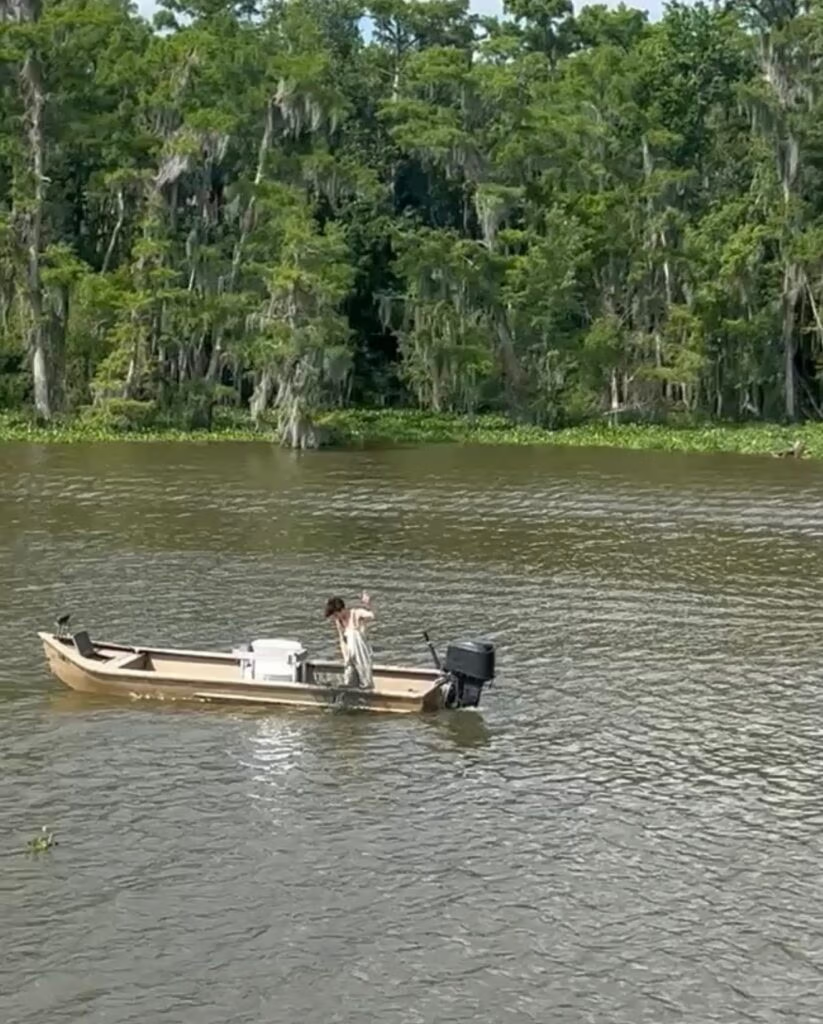
This is a young man checking traps on the Intracoastal.  What a wonderful way to grow up, very much the way I grew on the Little Portage River in Oak Harbor, Ohio.  

Thanks For Following

We hope you enjoy this blog, please feel free to ask questions, write to mikebunning@me.com